Is Blood a Biohazard: The Hidden Risks Most People Don't Know
Is blood a biohazard? Yes. Learn why blood carries hidden health risks, how far it spreads, and when professional cleanup is the safer choice.

Blood is something most people encounter only in small, ordinary amounts. A scraped knee, a shaving nick, a paper cut. In those moments it feels harmless, easy to wipe away and forget.
But when blood is present in larger quantities, after an accident, an injury, or a traumatic event, the situation changes completely. What looks like a mess that can be handled with a mop and a strong cleaner is actually something far more serious. The question of whether blood is a biohazard is not just a technicality. It carries real consequences for health, safety, and how a space should be handled afterward.
This article explains what makes blood a biohazard, the risks that are easy to overlook, how it should be handled, and when the situation calls for trained help.
Is Blood a Biohazard? What the Answer Means
Yes. Blood is classified as a biohazard because it can carry pathogens capable of causing serious illness.
A biohazard is any biological material that poses a risk to human health. Blood falls squarely into that category because it may contain viruses and bacteria that are not visible to the eye and cannot be judged by how the blood looks. This is why regulatory bodies treat blood and other bodily fluids as regulated waste, with specific rules for how they must be handled, cleaned, and disposed of.
The key point is that the danger is not always obvious. A small amount of blood from a healthy person and a large amount from an unknown source can look identical, yet the risk they carry can be very different. Because there is no way to confirm what a given sample contains just by looking, the safest and most widely accepted approach is to treat all blood as potentially infectious.
How Blood Is Classified as a Biohazard
Blood is recognized as a biohazard under workplace safety and health regulations that govern how potentially infectious material must be managed.
These standards exist because people in many settings, from healthcare to property cleanup, can be exposed to blood as part of their work. The rules cover protective equipment, cleaning and disinfection, labeling, and disposal. The reason this matters to an ordinary property owner is simple. If trained workers are required to follow strict protocols around blood, that is a clear signal that it is not something to handle casually at home.
What Makes Blood Hazardous
The hazard in blood comes from what it can carry rather than the blood itself.
Bloodborne pathogens are microorganisms in blood that can cause disease. Several of them are well documented and can remain capable of causing infection even after blood has left the body. The most commonly referenced include:
HIV, the virus that attacks the immune system and can lead to AIDS
Hepatitis B, a virus that affects the liver and is known to survive on surfaces for an extended time
Hepatitis C, another serious liver infection that spreads through blood to blood contact
Beyond these, blood can also harbor other bacteria and viruses depending on the source. Because these pathogens are invisible, there is no reliable way to look at a scene and know what is present. That uncertainty is exactly why blood is treated as hazardous by default rather than judged case by case.
Blood vs. Everyday Spills: Why Cleanup Differs
One of the clearest ways to understand why blood is treated differently is to compare it directly with the ordinary messes people clean every day. The table below lays out why standard cleaning is built for one and not the other.
Factor | Everyday Spill | Blood as a Biohazard |
Main concern | Appearance and odor | Health risk from pathogens |
Hidden spread | Usually stays where visible | Can soak into floors, padding, and walls |
Risk after drying | None of significance | Some pathogens can stay infectious |
Cleaning approach | Wipe, mop, standard cleaner | Assess, disinfect, remove affected material |
Protective equipment | Not required | Required to avoid exposure |
Disposal | Regular household trash | Regulated as biohazard waste |
Who should handle it | Anyone | Trained professionals for significant scenes |
The contrast makes the point plainly. A spill is judged by how it looks once it is gone. Blood is judged by whether the space is genuinely safe, which is a much higher and more complicated standard to meet.
The Hidden Risks of Blood Most People Overlook
The risks people tend to underestimate are the ones that are not visible at the surface.
When blood is involved, the obvious stain is rarely the whole story. The real concerns often sit beneath what the eye can confirm, which is why so many situations are more serious than they first appear.
How Far Blood Spreads Beyond the Surface
Blood does not stay neatly where it lands.
On hard surfaces it can travel along seams and edges. On soft or porous materials it behaves differently, soaking inward and downward in ways that are easy to miss. A single visible mark on the floor can sit above carpet padding, subflooring, or other materials that have absorbed far more than the surface suggests. This is one of the central challenges in any blood cleanup situation, where what is hidden often matters as much as what is seen.
Can Pathogens Survive in Dried Blood?
A common assumption is that blood becomes safe once it has dried. That is not the case.
Certain pathogens can remain infectious on surfaces for an extended period after exposure. A dried area is not proof that the risk has passed, and contact with it can still pose a danger. This is part of why standard cleaning falls short. Wiping a surface until it looks clean does not guarantee that the hazard has been removed.
Why Blood Odor Signals Deeper Contamination
Odor is more than an unpleasant side effect. It can be a sign that contamination has reached places that are not visible.
When blood soaks into porous materials, the source of an odor may sit beneath the surface rather than on top of it. Masking the smell with air fresheners or surface cleaners does not address what is causing it. In many cases, lingering odor is an indication that materials need to be properly treated or removed, not simply cleaned.
Why a Clean Looking Scene Can Still Be Unsafe
Perhaps the most overlooked risk is the confidence that comes from a scene that simply looks clean.
Appearance is not a reliable measure of safety when blood is involved. A room can look noticeably better after being wiped down while contamination remains in the materials underneath. Without proper assessment, disinfection, and the right protective measures, a space that seems handled may still carry real risk to anyone who enters it.
Where Blood Becomes a Biohazard Risk
Blood can require careful handling in a wide range of situations, not just dramatic ones.
These scenes vary in cause but share the same underlying issue. The blood present may carry pathogens, may have spread further than it appears, and may have reached materials that cannot be made safe through ordinary cleaning. Common examples include:
Accidents and serious injuries in the home or workplace
Medical emergencies that leave significant blood behind
Violent incidents that become a crime scene cleanup
An unattended death where blood and other fluids are present
Vehicles, rental units, and commercial spaces affected by any of the above
In each of these, the goal is the same. The space needs to be made genuinely safe, not just visually clean.
Why Proper Blood Cleanup Matters
Because blood is a biohazard, the way it is handled is not just a matter of preference. It follows established safety standards for a reason.
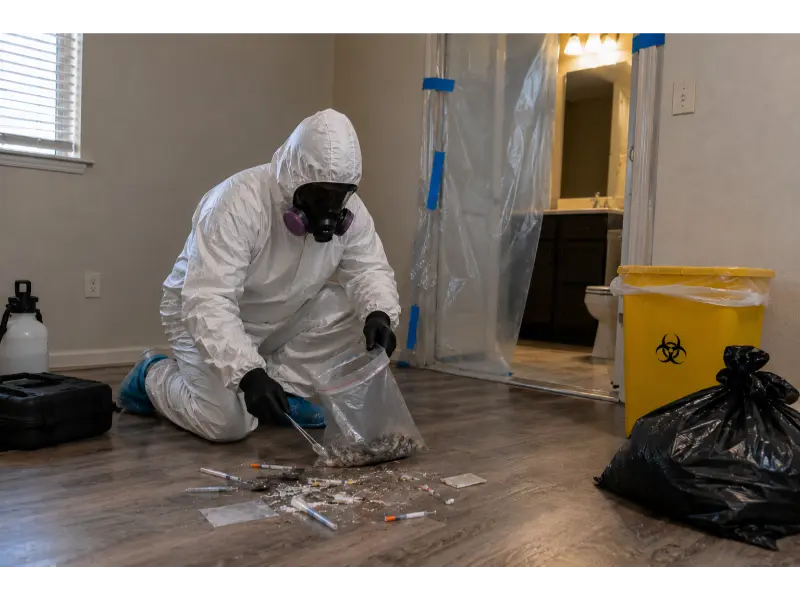
Handling blood safely involves more than cleaning. It requires understanding how far contamination has spread, using protective equipment to avoid exposure, disinfecting to a proper standard, and disposing of contaminated materials according to regulations. These steps exist to protect everyone involved, both during the work and after it is finished.
The Risks of Cleaning Up Blood Yourself
Attempting to clean a significant blood scene without training and equipment carries risks that are easy to underestimate.
Direct contact with blood, breathing in contaminants in an enclosed space, or unknowingly spreading material to other areas can all turn a difficult situation into a dangerous one. There is also the question of disposal, since contaminated materials cannot simply be thrown out with regular household trash. What feels like a way to save time or money can create new problems that are harder to undo.
What Professional Blood Cleanup Involves
Professional handling of a blood scene follows a clear sequence rather than a single step.
It generally begins with assessing how far the contamination has spread, including beneath the surface. From there it moves to controlling the area, removing materials that cannot be salvaged, cleaning and disinfecting what remains, treating the source of any odor, and disposing of contaminated waste according to regulations. Proper documentation often follows, which can matter for insurance. Each stage builds on the one before it, which is why skipping ahead to surface cleaning tends to leave the real problem unresolved.
When to Call a Blood Cleanup Professional
The safest approach is to treat any substantial blood scene as something that calls for trained help.
Professionals bring the assessment, protective equipment, disinfectants, and disposal methods that the situation requires. If the amount of blood is more than a minor cut, if it has reached porous materials, if there is odor, or if the source is unknown, those are all strong signals that the scene should not be handled alone.
Get Professional Blood Cleanup From Remnant
When blood is present, Remnant is equipped to handle the situation safely and take that burden off your shoulders.
As a biohazard cleanup company serving the Western United States, Remnant treats blood as the regulated hazard it is. The team is trained to follow established health and safety protocols, using proper protective equipment and commercial-grade disinfectants to remove all traces of blood, decontaminate the area, neutralize odors, and restore the space so it is safe to return to. Remnant respond around the clock, approach every scene with discretion and care, and can also help guide you through the insurance process, since coverage applies in many cases.
If you are facing a situation involving blood, you do not have to handle it alone. Reach out to Remnant today to speak with a team that will treat your situation with the urgency and professionalism it deserves.
Learn