Meth Lab Cleanup: Why Walls and Vents Stay Toxic for Years
Meth lab cleanup removes residue that lingers in walls and vents for years. See the warning signs, health risks, and why certified help matters.
Meth lab cleanup is the specialized decontamination of a property where methamphetamine was manufactured or heavily smoked, and it matters because the hazard does not disappear when the activity ends. Producing the drug fills the air with chemical vapor and fine particles that settle into drywall, paint, carpet, insulation, and the ductwork of the heating and cooling system. Those residues can stay active for years. A property can look clean, smell fine, and still carry enough contamination to put the next family at risk, because surface scrubbing moves what you can see and leaves what you cannot. This guide explains how the contamination forms, why walls and vents hold it for so long, how to tell if a property was affected, the health risks involved, and what professional meth lab cleanup actually requires.
How a Meth Lab Contaminates a Property
Contamination starts during use. Manufacturing methamphetamine relies on a mix of volatile solvents, acids, and reactive chemicals, and the process releases a cloud of toxic fumes and airborne particles into the room. That cloud does not stay in one place. It drifts on the air currents inside the building and lands on every exposed surface, coating ceilings, walls, floors, countertops, light fixtures, and furniture in a thin film of residue. Smoking the drug contaminates a space too, just more gradually, which is why a rental or a home where it was used heavily over months can test positive even though no manufacturing ever happened there.
Each batch and each session adds another layer. A property used as an active lab can hold heavy buildup, while a shorter period of use still spreads contamination across an entire room or floor. Where chemicals were poured down sinks or toilets, the residue reaches the plumbing as well. The same fumes that coat hard surfaces also soak into anything soft and porous nearby, which is where the longer problem begins.
Why the Residue Stays When the Lab Is Gone
Removing the equipment and the people does nothing to the residue left on and inside the structure. The contamination is already part of the materials that make up the home, and two features of any building cause it to settle in and spread: porous surfaces and the air system.
How Walls and Porous Materials Absorb It
Drywall, unsealed wood, paint, carpet, padding, insulation, and fabric all behave like sponges. Meth residue does not simply rest on top of them. It works below the surface, into the pores and fibers where no cloth or household cleaner can reach. This is the difference between visible and hidden contamination. The visible film wipes away easily, which is exactly why a quick cleaning feels convincing, but the residue held inside porous materials remains. Painting over a contaminated wall or laying new carpet on a contaminated subfloor seals the problem rather than solving it.
How Vents and the HVAC System Spread It
While a lab is active, the heating and cooling system keeps running, pulling contaminated air through the return vents and pushing it back out across the property. Over time that coats the ducts, the filter, the blower, and the coils with the same residue. The system becomes a reservoir. Long after the activity stops, every time the furnace or air conditioner switches on, it can stir settled residue loose and carry it back into rooms that were never used for the lab. A bedroom at the far end of the house can test positive simply because it shares the same ductwork. This is the core reason walls and vents stay toxic, and the reason meth lab cleanup has to treat the whole structure rather than a single room.
Why Meth Residue Stays Toxic for Years
Methamphetamine residue is chemically stable. Indoors, it is shielded from the sunlight, rain, and temperature swings that break many substances down outside, so it does not fade on its own. A closed building traps it. The residue can also release slowly from the materials it soaked into, returning to the air and resettling on clean surfaces months or years later. Once the strong initial fumes clear, what remains is usually invisible and has little or no smell, so occupants have no way to sense it. That is why a property can sit empty, get repainted, and still carry contamination when a new owner moves in. Without testing and proper decontamination, time alone does not make the space safe.
The table below shows where residue tends to collect and why ordinary cleaning leaves it behind.
Area of the Property | Why Residue Collects There | Why Surface Cleaning Fails |
Walls and ceilings | Vapor and particles settle and absorb into drywall and paint | Wiping removes the film but not what soaked in |
Carpet, padding, and subfloor | Soft fibers and gaps trap residue deep down | Shampooing reaches the top layer only |
Vents, ducts, and HVAC parts | The air system pulled contaminated air through during use | Changing a filter does not clean coated ductwork |
Insulation and wall cavities | Hidden spaces collect vapor that passes through gaps | Sealed behind walls and never reached by cleaning |
Plumbing and drains | Chemicals were poured into sinks, tubs, and toilets | Flushing water does not lift bonded residue |
Furniture and fabrics | Porous materials act like sponges | Standard cleaning cannot decontaminate them safely |
How to Tell If a Property Was a Meth Lab
Most people who end up in a contaminated property never knew its history. Former labs surface in rentals, foreclosures, and resales, and many are only identified after a law enforcement seizure. Police, who investigate and seize the scene, do not clean it. That responsibility falls to the property owner, which is the same principle behind crime scene cleanup after any serious incident.
There are physical clues worth knowing. Yellowish or brownish staining on walls, ceilings, or vents can mark where fumes condensed. A lingering chemical, solvent, ammonia, or sour odor may remain in materials. Other signs include windows that were blacked out or heavily covered, makeshift ventilation such as fans cut into walls or ducting run to the outside, corroded or stained sinks and drains, burn marks on surfaces, and an unusual number of chemical containers or stripped packaging left behind. Disclosure rules add another layer. Some states require sellers or landlords to disclose known contamination, and some keep public records of identified properties, but the rules vary widely, so confirm what applies where your property sits. None of these signs is proof on its own. The only way to confirm contamination is testing.
The Health Risks of Living With Meth Residue
Meth residue is more than a cleanliness concern. The chemicals can enter the body through the skin, through breathing contaminated air or dust, and by hand to mouth contact with tainted surfaces. Reported effects range from headaches, dizziness, breathing irritation, and trouble sleeping to more serious respiratory and neurological problems with heavier or longer exposure.
Children and pets carry the most risk. They spend time close to the floor, touch surfaces constantly, and put their hands and toys in their mouths, so they take in more of whatever the property holds. Tenants and buyers who move in unaware are exposed daily without realizing the source. Because individual reactions vary, anyone who suspects exposure should speak with a medical professional, and the specific safety standards for your area are best confirmed with your state health department or the EPA.
How Professional Meth Lab Cleanup Works
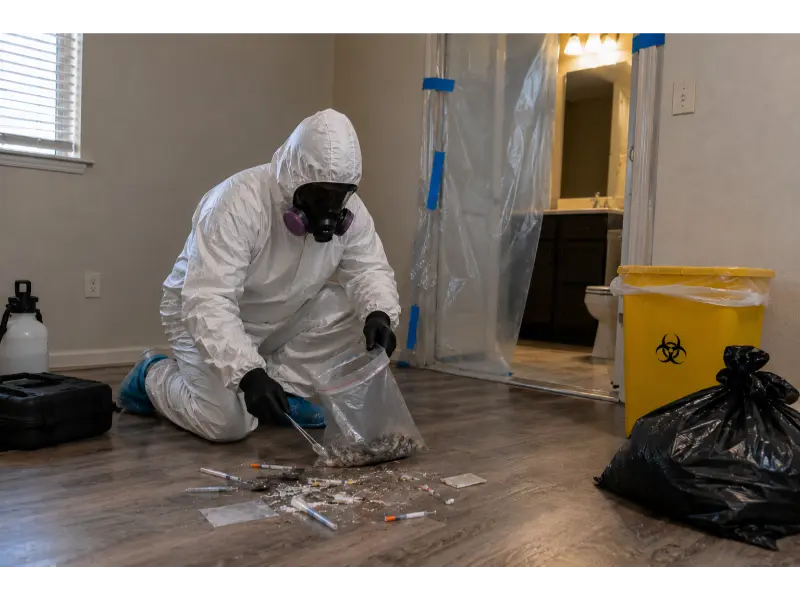
Because the contamination is invisible, bonded to building materials, and spread through the air system, this is not a job for household products or a general cleaning crew. Meth contamination is among the most demanding forms of drug cleanup, and it sits within the broader field of biohazard cleanup for good reason. Proper meth lab cleanup follows a clear sequence, and certified technicians work through it in order.
It begins with assessment and testing. Surface wipe samples are taken from walls, floors, vents, and other locations and analyzed by a laboratory, and the results are compared against the contamination limit set by the state. That step does two things. It confirms whether the property is over the line, and it maps how far the residue has traveled, which usually reaches well beyond the obvious room. Containment comes next, sealing off the affected area so nothing spreads to clean parts of the property during the work.
From there, technicians make the call on what can be saved. Heavily contaminated porous materials such as carpet, padding, and sections of drywall are removed, while surfaces worth keeping are decontaminated with industrial agents that lift residue out of the material rather than smearing it around. The HVAC system gets its own attention, since leaving the ductwork untreated would let it recontaminate everything else, and plumbing is addressed where chemicals were dumped. After cleaning comes odor source treatment, which targets the cause rather than masking the smell, followed by the safe disposal of contaminated waste under the rules that apply to hazardous material.
The final step is clearance testing and documentation. A second round of sampling confirms the property has dropped below the threshold the state requires before anyone moves back in, and the documented scope of work supports an insurance claim. Those standards differ by location, so it is worth confirming the requirements for your property type with the relevant authority.
Meth Lab Cleanup You Can Rely On
A property's history with meth does not clean itself up, and time alone will not bring it below a safe level. Before anyone treats a former lab as livable, the contamination in the walls, vents, and porous materials needs to be tested, removed, and verified. Remnant handles that work end to end, from assessment and testing through containment, removal of contaminated materials, decontamination, odor source treatment, and safe disposal, then documents the scope of work to support your insurance claim. Most cases are covered by homeowners or general liability insurance, and a sliding scale is available for those without coverage.
If you own, manage, or are about to buy a property where meth was made or used, reach our team for discreet, 24/7 support before anyone moves back in. We are here when you need it most.
Learn