How to Clean a Hoarder's House Without Making It Worse
Learn how to clean a hoarder's house safely, step by step, how to gauge severity, what mistakes to avoid, and when to call a professional cleanup team.
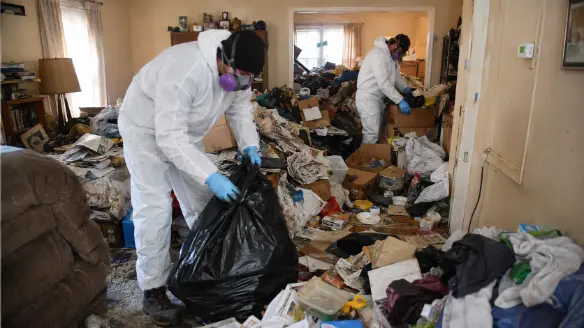
Cleaning a hoarder's house is one of the hardest jobs a person can take on, and not only because of the sheer amount of stuff involved.
There is the physical scale of it, the hidden hazards, and the emotional weight that comes with sorting through a lifetime of belongings. Done carefully, the process can restore a home and bring real relief. Done carelessly, it can damage trust, create health risks, and set the whole effort back. The goal is not just to clear a space. It is to clear it in a way that keeps everyone safe and does not make a difficult situation worse.
This article walks through how to approach the job thoughtfully, from understanding what you are dealing with to knowing when the situation calls for trained help.
Why Cleaning a Hoarder's House Is Different
A hoarded home is not simply a messy home, and treating it like one is the first mistake people tend to make.
Hoarding is widely recognized as a mental health condition. The American Psychiatric Association formally classified it as hoarding disorder in 2013, which means the accumulation is a recognized clinical issue rather than a cleanliness problem or a character flaw. The items usually have emotional roots, and they hold meaning to the person who kept them, even when that meaning is hard for others to see. This is why a cleanup that ignores the person's feelings often fails. The clutter can come back, and the relationship can be damaged in the process.
There are also practical reasons the job is different. Hoarded spaces can hide serious hazards beneath the surface, and the deeper the accumulation, the more those hazards multiply. Understanding both sides, the emotional and the physical, is what separates a cleanup that helps from one that backfires.
How to Gauge the Severity of a Hoarded Home
Before deciding how to approach a cleanup, it helps to understand just how serious the situation actually is. Severity changes everything, from how long the job will take to whether it is safe to attempt at all.
A useful way to do this is to look at the main living areas, the kitchen, living room, and bedroom, and place each one into one of three broad levels of severity. This gives everyone involved a shared and far less emotional sense of where things actually stand.
Mild: rooms are cluttered but still usable. Pathways are clear, surfaces are mostly accessible, and the home still functions for everyday life.
Moderate: clutter has started to take over. It covers much of the floor, walkways narrow, and furniture or whole rooms become only partly usable.
Severe: the space is overwhelmed. Floors are largely buried, piles can reach waist or chest height, and basic daily activities like cooking, sleeping, or moving safely through the home become difficult.
Once a home reaches the moderate level, the clutter is usually affecting daily life in real ways, and that is generally the point where outside help becomes worth considering. At the severe level, the situation often involves hazards that go well beyond clutter, and it tends to call for trained professionals rather than a family effort. Simply placing a home honestly within one of these levels is one of the most useful things you can do before lifting a single item.
Understand the Risks Before You Begin
Once you have a sense of severity, the next step is understanding what a hoarded home can actually contain. The dangers are often greater than they appear from the doorway.
Common hazards in a heavily hoarded space include:
Mold and bacteria growing in damp or buried areas
Dust and airborne particles that can affect breathing
Pests such as rodents and insects, along with the waste they leave behind
Blocked exits and unstable piles that can shift or collapse
Structural strain on floors and walls from accumulated weight
Hidden biohazards, including human or animal waste
These are not reasons to panic, but they are reasons to plan. Walking in without protection or a strategy can turn a cleanup into an injury or an illness. Knowing what may be present allows you to prepare properly and to recognize when a space has crossed the line into something that should not be handled alone.
How to Clean a Hoarder's House
Once you understand the risks, the work itself becomes more manageable when it follows a clear order. Rushing or skipping ahead is what tends to make things worse, so each stage builds on the one before it.
Step One: Start With a Conversation, Not a Cleanup
The most important step happens before any cleaning begins.
If the person who lives in the home is still involved, the process has to start with them. Forcing a cleanup, or clearing items without permission, can cause real distress and can break the trust the entire effort depends on. A calm, respectful conversation about goals, boundaries, and pace sets the foundation. The aim is to work with the person, not around them.
Step Two: Make a Plan and Set Realistic Goals
Trying to do everything at once is overwhelming and rarely works.
A better approach is to break the home into smaller, manageable areas and decide where to begin. Many people start with a space that offers a clear safety benefit, such as clearing blocked exits or pathways. Setting realistic goals for each session helps the work feel achievable rather than endless, and it reduces the pressure that can cause a person to shut down.
Step Three: Gather Supplies and Protective Gear
Personal safety comes before productivity.
At a minimum, that means sturdy gloves, closed shoes, and protection for your lungs in dusty or contaminated areas. It also helps to have heavy duty trash bags, sturdy boxes for sorting, and cleaning supplies ready before you start, so the work does not stall halfway through. Good ventilation matters too. Opening windows and keeping air moving helps reduce exposure to dust, mold, and odors. If the space contains waste or biohazards, ordinary household precautions are not enough, which is an important signal in itself.
Step Four: Sort Carefully and Respectfully
This is where patience matters most.
A common method is to sort items into clear categories such as keep, donate, and discard. The key is to involve the person in decisions about their belongings whenever possible, rather than making those calls for them. Sentimental items deserve extra care and time. Moving too fast, or discarding something the person was not ready to part with, can damage trust and stall the entire process.
Step Five: Remove Trash and Clutter Safely
Once items have been sorted, removal can begin in earnest.
Trash and damaged goods can be cleared out, but heavy or unstable piles should be approached with caution to avoid injury. Keep walkways clear as you work so the space becomes safer rather than more chaotic. Some materials, especially anything contaminated, cannot simply go out with the regular trash and require proper disposal.
Step Six: Clean and Disinfect What Remains
Removing the clutter reveals surfaces that often have not been cleaned in a long time.
Floors, walls, and other surfaces may need thorough cleaning and disinfection, particularly in kitchens and bathrooms where bacteria and mold are most likely. This is also the stage where hidden damage tends to surface, from stained flooring to areas affected by moisture or pests. Addressing these properly is what makes the home genuinely livable again, not just clearer.
Step Seven: Address Odors at the Source
Lingering smells are common in hoarded homes, and they are rarely fixed by air fresheners.
Odor usually has a source, such as contaminated materials, mold, or waste that has soaked into surfaces. Masking the smell does not solve it. The odor only fully resolves once the underlying cause has been removed or properly treated, which sometimes means removing affected materials altogether.
Step Eight: Plan for What Happens After
A cleanup is not truly finished when the last bag is carried out.
Hoarding has a strong tendency to return if the underlying causes are not addressed, so the period after the work matters as much as the work itself. Ongoing support, whether from family, a therapist, or a support group, gives the result a far better chance of lasting. Maintaining the space in small, regular steps is much easier than facing another full cleanup later.
Mistakes That Make a Hoarding Cleanup Worse
Knowing what not to do is just as important as knowing the right steps. A few common mistakes can undo good intentions quickly.
The most damaging mistakes include:
Throwing away belongings without the person's consent, which can break trust and increase distress
Forcing the whole job into a single day, which overwhelms everyone involved
Skipping protective gear and exposing yourself to mold, dust, or biohazards
Treating the clutter as the only problem while ignoring the emotional side
Masking odors instead of removing what is causing them
Disposing of contaminated materials improperly
Treating the cleanup as the end rather than planning for ongoing support
Each of these tends to create a new problem in place of the one being solved. Avoiding them is often the difference between a cleanup that lasts and one that quietly reverses over time.
How Long Does It Take to Clean a Hoarder's House
There is no single answer, because the timeline depends heavily on the severity of the situation and the size of the home.
A lighter case at the mild level might be handled over a few days with planning and help. A severe case, especially one involving biohazards, structural concerns, or extensive contamination, can take considerably longer and is rarely something a family can complete alone. Trying to compress a large job into too little time is one of the surest ways to make it worse, both for the home and for the person at the center of it. Setting expectations realistically from the start helps everyone stay committed through to the end.
When to Call a Professional Hoarding Cleanup Company
Some hoarding situations can be handled with patience, planning, and support from family. Others genuinely should not be tackled alone.
It is time to consider professional help when the home contains significant biohazards, when mold or pest infestations are extensive, when the structure itself may be compromised, or when the scale of the accumulation is simply beyond what a family can safely manage. Homes at the severe level, along with any situation involving waste, contamination, or a connection to a biohazard cleanup, are clear signals that trained help is the safer choice.
Professionals bring more than labor. They bring assessment, protective equipment, proper disposal methods, decontamination, and odor treatment, along with the experience to handle sensitive situations with care. In the most severe cases, a hoarded home can overlap with other serious conditions, including those that require crime scene cleanup, and those scenes are never something to face without expertise.
Get Compassionate Hoarding Cleanup From Remnant
When a hoarding situation is more than a family can safely manage, Remnant is here to help carry that weight.
As a biohazard and hoarding cleanup company serving the Western United States, Remnant approaches each home with discretion, patience, and respect for the person at the center of it. The team is trained to assess the property, sort and remove items thoughtfully, decontaminate and disinfect surfaces, treat lingering odors, and restore the space to a safe and livable condition. Remnant works confidentially, handles sensitive belongings with care, and can also help guide you through the insurance process, since coverage applies in many cases.
If you or someone you love is facing a hoarding situation, you do not have to take it on alone. Reach out to Remnant today to speak with a team that will treat your home, and your family, with the compassion and professionalism the moment deserves.
Learn