How to Remove Blood Stains: What Works and What Sets Them Forever
How to remove blood stains the right way: what lifts them, what sets them for good, and when blood becomes a job for certified help.

Knowing how to remove blood stains comes down to one rule that decides almost everything: cold water lifts blood, and heat sets it for good. Blood is different from most stains because it does not simply rest on the surface. It is mostly protein, and protein reacts to heat the way an egg white does in a hot pan, firming up and bonding to whatever it is sitting in until it stops letting go. That is why the same stain can rinse out cleanly in one home and turn permanent in another. The encouraging part is that a fresh blood stain is very often removable with things you already own, as long as you match the method to the material and avoid the few mistakes that lock it in. This guide covers what to do the moment a stain happens, how to treat fresh and dried blood across different fabrics and surfaces, the missteps that set a stain forever, and the point where blood stops being a laundry problem and becomes a safety one.
Act Fast: Why Timing Decides the Outcome
The clock starts the instant blood lands on something. While it is still wet, it rests on and between fibers and rinses away with relative ease. As it dries, it binds to the material and works its way deeper, which is why a stain caught in the first few minutes behaves nothing like one found the next morning. Everything that follows works better the sooner you begin. Your first move is to blot the area with a clean dry cloth, pressing straight down to pick up what has not absorbed yet. Press, do not wipe, since dragging the cloth pushes blood into surrounding fibers and widens the mark. If the blood is not your own, put on gloves before you touch it, since even a small amount can carry pathogens.
How to Remove Fresh Blood Stains
For clothing, bedding, and anything else you can rinse and machine wash, work in order rather than reaching for the strongest product first:
Blot up everything you can with a clean dry cloth.
Hold the fabric so cold water runs through the back of the stain, pushing blood out the way it entered instead of deeper through the weave.
Apply one of the treatments in the table below and give it several minutes to work.
Rinse with cold water and check the result against the light.
Repeat while the stain keeps fading, then wash on a cold cycle.
Each common treatment works in a different way, which is worth understanding before you pick one.
Treatment | How It Works | Best Use and Cautions |
Cold water | Flushes wet blood out before it can bind | The foundation of every method, so keep all water cold |
Dish soap | A mild surfactant that loosens blood from fibers | Safe on most fabrics; work it in gently, then rinse |
Enzyme cleaner | Digests the protein in blood so it washes away | Strong on dried stains, but avoid wool and silk, as explained below |
Hydrogen peroxide | Reacts with blood and foams, lifting it loose | Light or white fabrics only, since it can bleach color; always test first |
Baking soda paste | Draws staining up out of dense materials | Best for mattresses and upholstery; let it dry, then blot or vacuum |
White vinegar, diluted | A mild acid that helps break a fresh stain down | Rinse it out fully before washing, and spot test colors |
Salt water | Helps draw out and loosen blood | A useful first soak rather than a final fix; keep it cold |
Match the Method to the Fabric
The same treatment that rescues a cotton shirt can ruin a silk blouse, so the material matters as much as the technique, and the reason is chemistry. Enzyme cleaners work by breaking down protein, and wool and silk are themselves made of protein, which means a strong enzyme product can attack the fabric along with the stain. Keep enzyme cleaners and hydrogen peroxide for sturdy, washable materials such as cotton, linen blends, polyester, and nylon. For wool, silk, and other delicate fabrics, stay with cold water and a little gentle dish soap, work slowly, and accept that a professional cleaner may be the safer route for anything valuable. Whatever you reach for, test it first on a hidden spot such as an inside seam or the back of a cushion, since color loss is its own kind of permanent stain.
How to Treat Surfaces You Cannot Soak
Soaking is off the table for anything attached to padding or a frame, where extra liquid simply carries blood down into layers you cannot reach. The aim shifts to lifting the stain with as little moisture as possible.
Carpet and Upholstery
Dampen a cloth with cold water and a little dish soap, then blot from the outside of the stain inward so you tighten it rather than spread it. Move to a clean section of cloth as it picks up color, then follow with a second cloth dipped in plain cold water to rinse. Let it air dry, and repeat only if a shadow remains.
Mattresses
Blot up what you can, then work in a paste of baking soda, or a small amount of hydrogen peroxide on light colored bedding. Let it sit so it can draw the stain upward, blot again, and let the spot dry fully before you make the bed. Several light passes beat one heavy soak every time.
How to Remove Dried or Set Blood Stains
A dried stain is harder, though rarely hopeless, and the work shifts to breaking the bond before you treat it:
Scrape or brush away any crusted blood on the surface with the dull edge of a spoon or a soft brush.
Soak the item in cold water, sometimes for a few hours, to soften what remains.
Work an enzyme cleaner directly into the stain, since it targets the protein holding it in place.
Wait at least half an hour, then rinse with cold water.
Repeat the soak and treatment as many times as the stain keeps lightening.
Blood that has already been through a hot wash or a dryer may only fade rather than vanish, because the bond is no longer fully reversible. At that point you are minimizing the mark, not erasing it.
The Mistakes That Set a Blood Stain Forever
Three habits turn a workable stain into a permanent one, and the first is heat. Warm or hot water cooks the protein into the fibers, and once it sets, no amount of soaking pulls it back. A dryer or a hot iron does the same in seconds, which is why a treated item should always air dry while you confirm the stain is completely gone. The way blood looks before it meets heat is the way it will look forever after. The second habit is reaching for chlorine bleach, which can react with blood rather than dissolve it, sometimes darkening or spreading the mark while weakening the fabric. If a white item needs more than cold water and an enzyme cleaner, oxygen bleach is the safer choice. The third is mixing cleaning products in search of something stronger, which does little for the stain and can release dangerous fumes. Patience with one method beats a cocktail of several.
When Blood Stops Being a Stain and Becomes a Biohazard
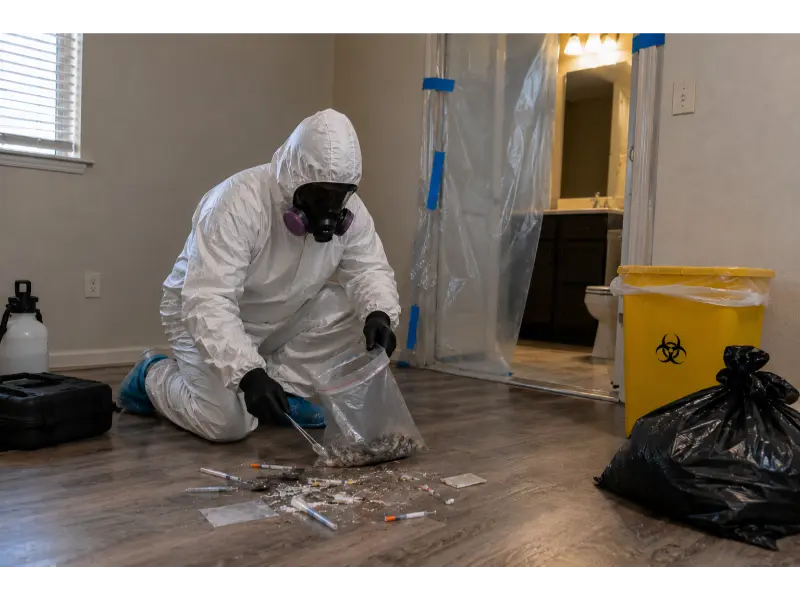
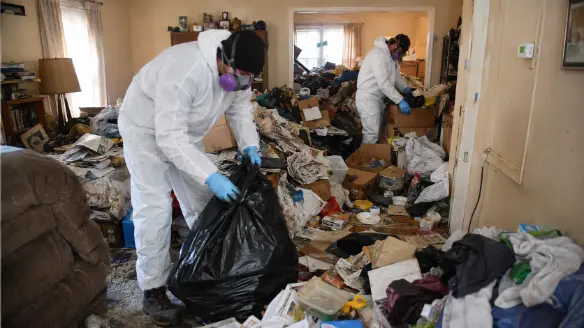
Everything above assumes a manageable amount of your own blood. Blood from someone else, or a large amount from an injury, accident, medical event, or crime, belongs in a different category. It can carry pathogens such as HIV, Hepatitis B, and Hepatitis C that leave no sign on the surface, and porous materials raise the stakes, because carpet, padding, subflooring, and mattresses absorb fluid well below what the eye can see. You can lift the visible mark and still leave contamination soaked into the layers underneath, which is the difference between hidden and visible contamination. Clearing a stain is not the same as decontaminating a space, neutralizing odor at its source, and disposing of biohazard waste safely. When the volume is significant or the blood is not your own, professional blood cleanup is the right call rather than a household attempt, and the same logic runs through biohazard cleanup more broadly. Our guide on what standard cleaning cannot handle shows where that line falls.
Professional Blood Cleanup Support
When a situation crosses that line, trained help beats trial and error. Remnant responds around the clock with certified technicians who decontaminate, disinfect, and restore the affected area discreetly, then document the work to support your insurance claim, with a sliding scale available for anyone without coverage. If you are facing more than a small, fresh stain, reach our team for discreet, 24/7 support before you scrub. We are here when you need it most.
Learn