What Does a Dead Body Smell Like
What does a dead body smell like? Learn how decomposition odor develops, how it changes over time, and what it means for cleanup and property safety.
The question is uncomfortable, but it is also common. People search for it after something tragic, after noticing a strange odor in a property, or simply out of curiosity about how the human body changes after death. Understanding what that smell actually is and why it happens can help make sense of a situation that often feels confusing and overwhelming.
The odor associated with human decomposition is not random. It follows a biological process. It develops in stages. It changes over time. And once it appears, it usually signals that decomposition is well underway.
This article explains what causes the smell, how it develops, what influences its intensity, and why it can linger long after a body has been removed.
What Happens to the Body After Death
When a person dies, the body immediately begins a natural process called decomposition. The heart stops circulating oxygen. Cells no longer receive energy. Internal systems shut down. From that point forward, chemical and biological changes begin.
Within hours, the body starts to cool. Blood settles in lower areas due to gravity. Muscles stiffen. These early stages do not produce a strong odor. The smell most people associate with death does not appear right away.
The noticeable odor develops later, when bacteria inside the body begin breaking down tissues.
The First Signs of Odor
The human body contains trillions of bacteria, especially in the digestive tract. During life, these bacteria are contained and controlled. After death, the immune system no longer regulates them. They begin to multiply and spread.
As bacteria digest tissues, they release gases and chemical compounds. These compounds create the first signs of odor.
In the early phase, the smell may be faint and slightly sweet. Some describe it as similar to rotting meat or spoiled food. At this point, the odor may not immediately signal what it is, especially in larger spaces.
As decomposition progresses, the smell becomes stronger and more distinct.
Why Decomposition Smells So Strong
The powerful odor associated with a dead body comes from specific chemical compounds released during tissue breakdown.
As cells rupture and organs decompose, gases build up inside the body. These gases include compounds such as putrescine and cadaverine. These are produced when proteins break down. They are responsible for the foul, decaying odor people commonly recognize.
Sulfur containing compounds are also released. These contribute to the sharp, rotten egg like smell that often accompanies advanced decomposition.
The combination of these gases creates an odor that is heavy, persistent, and difficult to ignore. Many people describe it as sickly sweet at first, then increasingly pungent and overwhelming.
How the Smell Changes Over Time
Decomposition is not static. The odor changes as the body moves through different stages.
Early Decomposition
In the first one to three days, the smell may be mild but noticeable in enclosed spaces. It may resemble spoiled food or garbage. The odor tends to stay close to the body.
Active Decomposition
As gases accumulate and tissues break down more rapidly, the smell intensifies. This is often when people first detect that something is seriously wrong.
The odor becomes stronger, more penetrating, and more difficult to contain. It can spread through ventilation systems, under doors, and into neighboring rooms or units. In multi unit buildings, it may travel into adjacent apartments.
Advanced Decomposition
As fluids are released and tissues liquefy, the odor can become even more severe. Bodily fluids may seep into flooring, carpets, subflooring, and drywall. Once materials absorb these fluids, they continue to emit odor even after the body is removed.
At this stage, the smell is often unmistakable and can persist without professional remediation.
Environmental Factors That Influence the Smell
Not every situation is the same. Several factors influence how quickly the odor develops and how strong it becomes.
Temperature plays a major role. Warm environments accelerate bacterial growth and chemical reactions. In hot climates or uncooled indoor spaces, decomposition advances faster and odors intensify sooner.
Humidity also contributes. Moisture supports microbial activity and can help odors spread through porous materials.
Air circulation affects how far the smell travels. In tightly sealed spaces, the odor may concentrate and become overpowering. In more ventilated areas, it may disperse but still linger.
The position of the body and the surface beneath it also matter. Soft materials such as carpet and wood absorb fluids. Hard surfaces such as tile may be easier to clean but can still trap residue in grout lines or cracks.
Why the Smell Lingers After Removal
One of the most distressing aspects of decomposition odor is that it does not always disappear once the body has been taken away.
During advanced stages, fluids can saturate flooring and structural materials. Subflooring, insulation, and drywall can absorb organic matter. These materials then continue to release odor over time.
Standard cleaning methods are not designed to address this type of contamination. Household cleaners may mask the smell temporarily but do not remove the source. In some cases, sections of flooring or wall material must be removed because they are saturated.
Without proper remediation, the odor can return repeatedly, especially in warm or humid conditions.
Health Considerations
The smell itself is unpleasant, but it is also an indicator of biological contamination. Decomposition fluids can contain bacteria and pathogens. While the risk varies depending on the circumstances, direct contact with contaminated materials should be avoided.
In addition to potential exposure risks, the psychological impact of the odor can be significant. Many people report nausea, headaches, or emotional distress when exposed to decomposition smells. These reactions are common and understandable.
For property owners and managers, addressing the situation quickly is important for both health and structural reasons.
Situations Where This Question Often Arises
People usually search for this topic after noticing an unexplained odor in a property. Sometimes it occurs in a residential setting where someone has passed away alone and was not discovered immediately. In other cases, it may follow a traumatic event.
In multi unit buildings, neighbors may detect a strong smell before authorities are aware of the situation. Property managers may receive complaints about an unusual odor coming from a specific unit.
Understanding that decomposition odor has distinct characteristics can help explain why it spreads and why it does not simply go away with surface cleaning.
The Importance of Proper Remediation
When a body has been present for an extended period, cleanup often involves more than wiping down visible surfaces.
Fluids can penetrate beneath carpet into padding and subflooring. In some cases, sections of wood flooring must be cut out because they are saturated. Drywall may need to be removed if fluids have seeped into wall cavities.
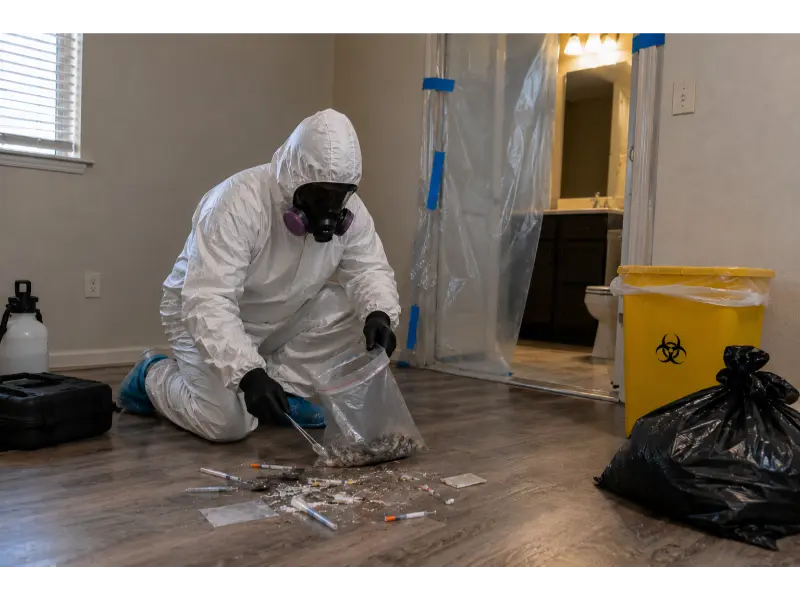
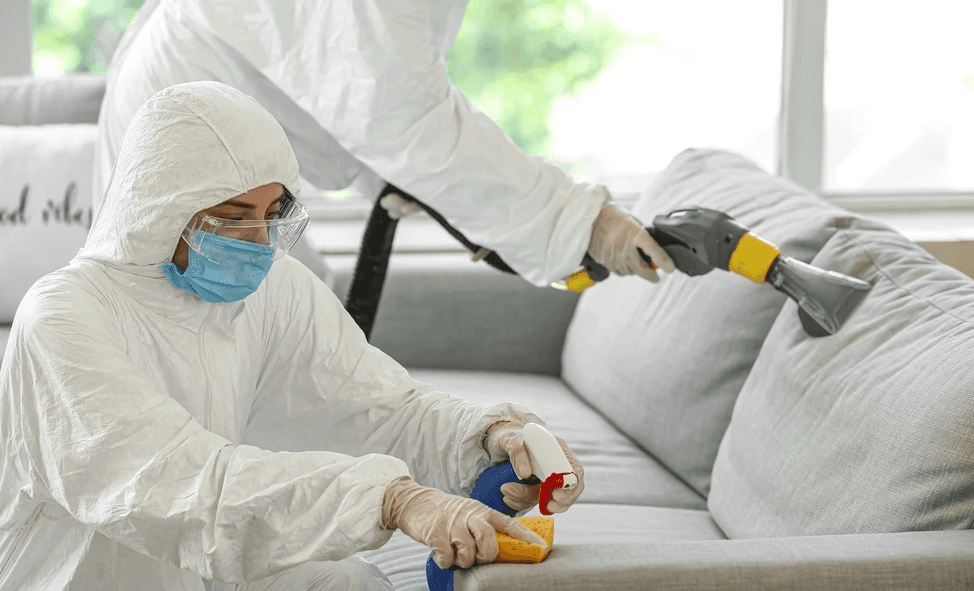
Professional remediation teams use protective equipment and follow established safety protocols. They remove contaminated materials, disinfect affected areas, and address odor at its source. The goal is not only to eliminate smell but to restore the space to a safe and habitable condition.
Attempting to handle advanced decomposition cleanup without proper training can expose individuals to biohazards and may lead to incomplete remediation.
When to Seek Help
If there is a strong, persistent odor that resembles decaying organic matter and it does not improve with standard cleaning, professional assessment may be necessary. This is especially true when a body has been undiscovered for days or longer.
In many cases, insurance policies cover death related and biohazard cleanup. The specifics depend on the policy and the circumstances, but property owners often do not need to manage the process alone.
Prompt action helps prevent further structural damage and reduces the risk of long term odor issues.
Restoring a Property After a Death
Decomposition is a natural biological process, but the aftermath can be overwhelming for families, property managers, and business owners. The smell is only one part of the issue. Hidden contamination and structural damage are often present beneath the surface.
Specialized biohazard cleanup services focus on thorough remediation. This includes identifying affected materials, removing contaminated sections when necessary, disinfecting the area, and ensuring that odors are fully neutralized rather than masked.
If you are dealing with a situation involving death, suicide, blood, or other biohazards, professional support can make the difference between a lingering problem and a fully restored property. Remnant provides death and biohazard cleanup services with experience in handling complex situations where fluids have penetrated flooring, drywall, and structural materials. If you need guidance or immediate assistance, reaching out promptly can help protect both the property and the people connected to it.
Learn