What Happens During a Suicide Cleanup Process
Surface cleaning is not enough after a traumatic event. Learn what suicide clean up includes and why professional remediation matters.
A suicide cleanup process is often misunderstood.
From the outside, people may assume it is a matter of removing visible blood, disinfecting the room, and moving on. In reality, the work is far more involved. This kind of cleanup deals with biohazard exposure, damaged materials, hidden contamination, and the condition of the space as a whole.
That is why suicide clean up is treated as a specialized service, not a standard cleaning job.
The goal is not simply to make the area look presentable again. The goal is to deal with what the event left behind in a way that is safe, thorough, and appropriate for the property.
Why the Process Starts with Evaluation
No two scenes are exactly alike.
Before any cleanup begins, the first step is understanding the condition of the area. The team needs to determine where the affected space begins, where it ends, and whether contamination stayed on hard surfaces or traveled into absorbent materials.
This first stage shapes everything that follows.
A small visible area does not always mean a small cleanup. Blood and bodily fluids can spread into carpet, padding, wood, subflooring, trim, and even drywall. Remnant’s internal brief notes that decomposition and fluid related contamination can get into flooring, carpet, subfloor, and drywall, and in severe situations can require extensive cleanup and demolition when materials become saturated. It also lists death and suicide cleanup as one of the company’s core services.
That is why a proper response starts with inspection, not assumptions.
What Professionals Look for Right Away
At the start of a suicide cleanup, professionals are usually focused on a few critical questions.
They need to know how much of the scene is visibly affected.
They need to know whether there are porous materials involved.
They need to know whether the contamination likely moved below the surface.
They also need to know whether the property may need repair work after the biohazard portion of the job is complete.
That early read of the situation helps determine whether the cleanup will stay limited to one area or expand into a larger restoration project.
Why the Area Has to Be Controlled
Once the scene has been evaluated, the next step is securing the workspace.
This part of the process is easy to overlook, but it matters. A contained work zone helps keep contamination from spreading through movement, improper contact, or unnecessary traffic in and out of the area.
It also helps create a cleaner, safer environment for the work itself.
This stage is not dramatic, but it is essential. Without it, the risk of carrying contamination into nearby rooms or surfaces increases.
What Gets Removed During Suicide Clean Up
This is where the process becomes much more serious than people expect.
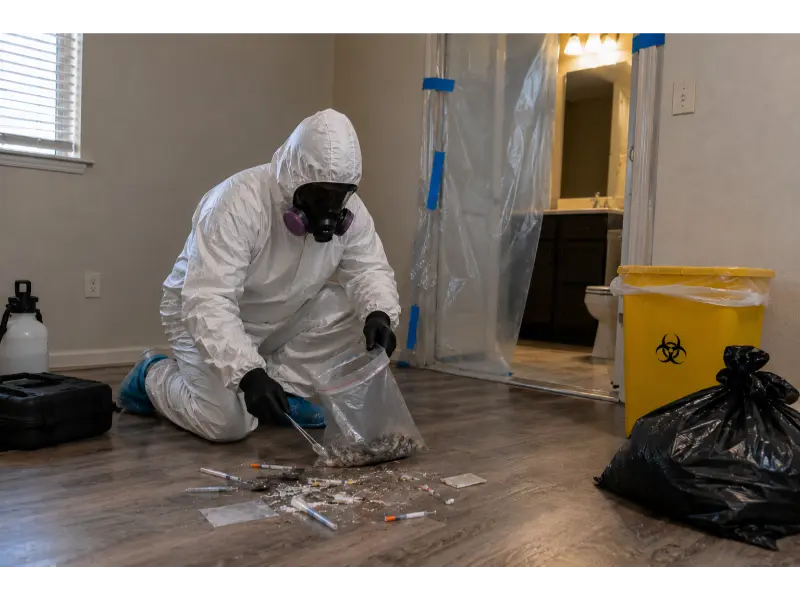
Cleanup is not limited to what is easy to see. If blood or bodily fluids have been absorbed by materials that cannot be fully restored, those materials have to come out.
That can include:
carpet
carpet padding
sections of subfloor
drywall
upholstered furniture
other soft or absorbent materials near the affected area
This is one of the clearest differences between suicide clean up and ordinary cleaning. Ordinary cleaning tries to save as much as possible. Biohazard cleanup has to make a different judgment. If a material is too deeply affected, keeping it in place can leave risk behind.
Why Visible Cleanup Is Only Part of the Job
A surface can look better long before the space is truly dealt with.
That is one of the biggest mistakes people make when thinking about suicide cleanup. They imagine that once the stain is gone, the room is handled. But appearance is only one piece of the situation.
If contamination has reached the material underneath the surface, a room can seem improved while still holding the real source of the problem.
That is why professionals do not stop at what the eye picks up first.
When Cleaning and Disinfection Actually Happen
Cleaning and disinfection are important, but they come after the most critical decisions have already been made.
Once affected materials have been removed, the remaining surfaces are cleaned to remove residue and then disinfected as part of the decontamination process. At that point, the work is focused on the areas that can still be treated and restored.
This stage helps prepare the space for whatever comes next, whether that is final verification, repairs, or further restoration.
It is an essential part of the process, but it is not the whole process.
Signs the Scene May Involve Deeper Damage
Some situations clearly point to contamination that goes beyond the top layer of a room.
A few of the most common signs include:
odor that remains even after visible material is addressed
staining that appears to extend past the immediate surface
carpet or padding that has absorbed fluids
warping, damage, or softness in flooring
affected trim, baseboards, or drywall
a scene that remained untreated for a period of time
When these signs are present, the cleanup may require more removal work and a more involved restoration plan.
What the Process Usually Looks Like From Start to Finish
For someone trying to understand the overall flow, a suicide cleanup process usually follows this order:
Stage | What It Involves |
Scene Evaluation | Determining what was affected and how far contamination spread |
Area Control | Limiting the work zone and preventing spread |
Material Removal | Taking out contaminated items and unsalvageable materials |
Surface Cleaning | Removing residue from the remaining area |
Disinfection | Treating the cleaned surfaces appropriately |
Restoration Review | Identifying whether repairs or additional work are needed |
That sequence may vary depending on the scene, but the logic stays the same. First understand the condition of the property. Then address the hazard. Then restore what can safely remain.
What Families and Property Owners Often Do Not Expect
The hardest part for many people is realizing how quickly a cleanup can shift from a room level issue to a material level issue.
People often expect a service that cleans the obvious area and leaves everything else in place. But when fluids have reached flooring, wall material, or other absorbent surfaces, the property itself becomes part of the cleanup.
That is also why cost, timing, and scope can vary so much from one case to another. One scene may require contained cleanup and disinfection. Another may involve removal, demolition, and later repair work before the property is truly back in usable condition.
How Insurance and Practical Factors Can Affect the Job
Another reality of suicide clean up is that the logistics are not always the same from case to case.
Some jobs involve insurance. Others do not. Remnant’s internal notes point out that insurance may cover certain jobs, but not every situation is treated the same way.
That matters because the cleanup process is physical, but the next steps around the property often involve decisions about scope, payment, timing, and restoration.
For the people dealing with the aftermath, understanding that early can make the process a little less confusing.
Why Professional Handling Matters so Much
What makes suicide clean up different is not only the emotional weight of the situation. It is also the level of judgment the work requires.
Someone has to determine what can be saved.
Someone has to identify what cannot.
Someone has to understand where contamination may have traveled and what has to happen before the space can move toward restoration.
That is why this work should not be treated like an ordinary deep cleaning project. It requires a process, not guesswork.
The Real Purpose of the Cleanup
At its core, a suicide cleanup process is about restoring a property after a traumatic event in a way that deals with the actual condition of the space.
That means looking past the surface.
That means removing materials when needed.
That means cleaning and disinfecting what remains.
And that means making sure the next stage is based on what is truly there, not on what people hope is enough.
Call Remnant for Suicide Clean Up
Suicide clean up can involve far more than visible cleanup. Depending on the scene, it may require removal of contaminated materials, disinfection of the remaining space, and deeper restoration when fluids have spread into flooring, subfloor, or drywall. Remnant’s internal brief reflects exactly that type of work, including death and suicide cleanup as a core service and the need for extensive cleanup when contamination reaches structural materials.
If you need help after a suicide or other biohazard event, Remnant can help you take the next step with care and professionalism. Reach out today to speak with a team that knows how to assess the scene, handle the cleanup properly, and help restore the property as safely as possible.
Learn