How Long Does It Take for a Body to Decompose Indoors
How long does it take for a body to decompose indoors? Learn the timeline, key stages, and how temperature and environment affect structural impact.
When someone searches how long does it take for a body to decompose, they are usually trying to understand what happens over time inside a building. Decomposition indoors follows a biological timeline, but that timeline is influenced by temperature, humidity, air circulation, and the materials surrounding the body.
There is no single fixed answer. The process can begin within hours and continue for months. What changes is the speed and severity of each stage. Understanding that progression helps clarify what may be happening inside a home, apartment, or commercial property.
This guide walks through decomposition indoors in chronological order, from the first hours after death to the long term impact on a structure.
The First 24 Hours After Death
Decomposition begins immediately after death. Once the heart stops, oxygen no longer circulates. Cells start to break down. This early process is called autolysis, which means self digestion.
Within the first few hours, the body cools to match room temperature. Blood settles due to gravity. Muscles gradually stiffen. These early physical changes do not cause major structural impact inside a property, but the biological process has already started internally.
Bacteria that normally live in the digestive system begin multiplying without control. They start breaking down internal tissues. During this initial period, most changes are contained within the body.
In a climate controlled indoor environment, the first 24 hours are primarily internal. Visible signs and structural damage are minimal at this stage.
Days 2 to 3: Early Decomposition Indoors
Between the second and third day, bacterial activity increases significantly. Gases begin to build inside the body as tissues break down. This is when the body may start to swell.
Temperature plays a major role here. In a warm indoor setting, these changes accelerate. In cooler conditions, the process slows but does not stop.
At this stage, fluids inside the body begin shifting as cells lose integrity. However, substantial release of fluids into the surrounding environment typically occurs later.
Indoors, the body is protected from insects, weather, and animals, which can slow certain aspects of decomposition compared to outdoor exposure. Still, bacterial breakdown continues steadily.
Days 3 to 7: Active Decomposition
During this phase, decomposition becomes more advanced. Internal organs break down rapidly. Gas pressure can increase to the point where tissues rupture. This is when fluids may begin to escape the body.
When a body is in direct contact with flooring, mattress materials, or carpeting, those surfaces may begin absorbing fluids. Porous materials are especially vulnerable.
Indoor conditions matter greatly. In a sealed apartment with limited airflow, moisture and heat can concentrate around the body. In an air conditioned space, the timeline may stretch slightly longer.
By the end of the first week, visible tissue breakdown is significant. Structural contamination may already be occurring if fluids have penetrated surfaces.
Weeks 2 to 4: Advanced Breakdown
After the first week, soft tissues continue to degrade. Much of the internal structure has already been compromised. Fluids may continue to seep into flooring, subflooring, and any material beneath the body.
In indoor settings, the lack of sunlight and natural scavengers changes how the body progresses. The process becomes more about internal microbial activity and moisture retention.
If the environment is humid, decomposition may remain active and moist. If the space is dry, tissues can begin to dry out and partially mummify, especially if airflow is present.
At this stage, structural impact becomes more serious. Wood flooring, carpet padding, and subflooring can become saturated. Once fluids penetrate below the visible surface, removal of affected materials is often necessary to restore the space safely.
After One Month Indoors
After several weeks, much of the soft tissue may be gone or significantly degraded. The body may begin transitioning toward skeletonization, depending on environmental conditions.
In warm and humid indoor environments, decomposition can continue aggressively for weeks. In cooler or dry environments, the body may dry out more quickly, slowing further breakdown.
Even after a month, contamination can remain active within structural materials. Organic matter trapped in porous surfaces does not disappear on its own. It continues to break down until fully removed or neutralized.
At this point, cleanup is rarely superficial. The timeline has moved beyond surface level issues.
Factors That Influence Indoor Decomposition Time
While the general stages are predictable, the speed varies depending on several key factors.
Temperature
Temperature is the most significant factor. Warmer indoor conditions accelerate bacterial growth and tissue breakdown. A body in a heated apartment will decompose faster than one in a cooled environment.
Even a difference of several degrees can change how quickly tissues break down over days and weeks.
Humidity
Moisture supports microbial activity. High humidity slows drying and allows active decomposition to continue longer. Dry air can lead to partial mummification, which slows bacterial spread but does not stop decomposition entirely.
Airflow
Ventilation affects moisture and temperature stability. A sealed room may trap heat and humidity, accelerating breakdown. A ventilated space may allow partial drying.
Surface Materials
The type of surface beneath the body affects how quickly contamination spreads into the structure. Carpet, fabric, and unfinished wood absorb fluids readily. Tile and sealed surfaces may limit penetration, though cracks and grout lines can still allow seepage.
What Happens to the Property Over Time
Understanding how long it takes for a body to decompose indoors is not only about the body itself. It is also about what happens to the surrounding environment.
During the first few days, structural impact may be minimal. As decomposition progresses into the active stage, fluids can penetrate porous materials. The longer the body remains undiscovered, the deeper that penetration may extend.
Subflooring can become saturated. In multi story buildings, fluids may seep downward through cracks or gaps. Drywall in contact with contaminated flooring can absorb organic material.
Time increases complexity. A delay of several days versus several weeks can mean the difference between targeted cleaning and structural removal.
Misconceptions About Decomposition Indoors
One common misconception is that indoor decomposition is always slow. While indoor settings can reduce exposure to external elements, warm and humid buildings can actually accelerate breakdown.
Another misunderstanding is that once a body is removed, the problem is resolved. In reality, the biological process may have already affected surrounding materials. The length of time the body remained indoors determines how extensive that impact may be.
It is also important to understand that decomposition timelines vary. Health, body composition, environment, and positioning all influence how quickly changes occur.
When Decomposition Becomes a Structural Issue
After several days in warm conditions, contamination may extend beyond the visible area. After several weeks, structural materials may require removal.
Professional remediation often involves evaluating the depth of penetration. This may include lifting flooring, inspecting subflooring, and checking for moisture migration into adjacent materials.
The longer the timeline, the more likely demolition of affected sections becomes necessary. Removing saturated wood or drywall is sometimes the only way to fully restore a property.
Why Time Matters in Indoor Cases
Every additional day allows bacterial activity to continue. That activity produces fluids and organic residue that can soak into building materials.
In early stages, intervention may involve cleaning and disinfection of surface areas. In later stages, restoration may require cutting out sections of flooring or removing contaminated insulation.
Understanding the timeline helps clarify urgency. It also helps property owners and managers assess the scope of potential remediation.
Restoring an Indoor Environment After Extended Decomposition
When someone has been undiscovered indoors for an extended period, the focus shifts from understanding the timeline to restoring the property safely.
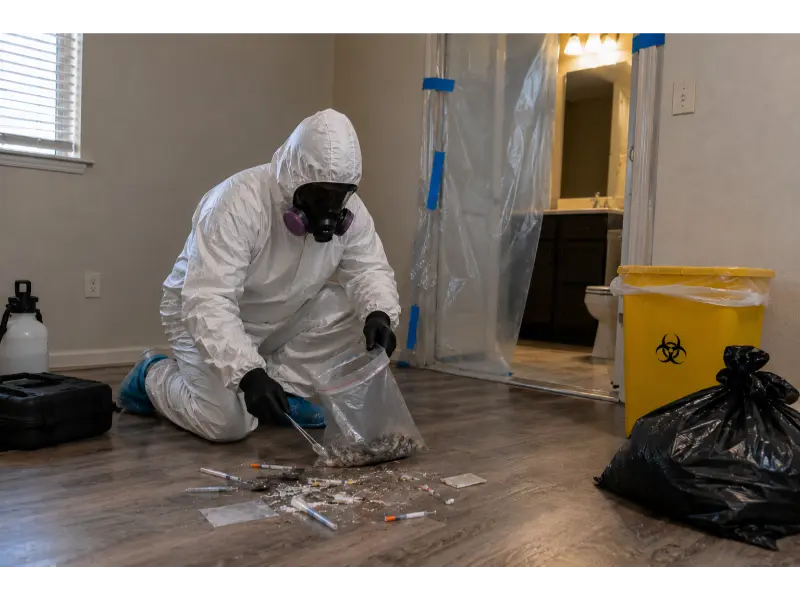
Effective remediation requires identifying all affected materials, removing those that cannot be salvaged, and thoroughly disinfecting the remaining structure. The goal is to eliminate biological contamination and prevent long term structural issues.
If you are dealing with a situation where a body remains indoors for days or weeks, professional assessment is critical. Remnant provides death and biohazard cleanup services with experience handling cases involving fluid penetration into flooring, subflooring, and structural materials. Acting promptly after discovery helps limit further damage and supports safe restoration of the space. If you need immediate assistance or guidance, contact Remnant to speak with a team experienced in handling indoor decomposition and biohazard cleanup safely and discreetly.
Learn