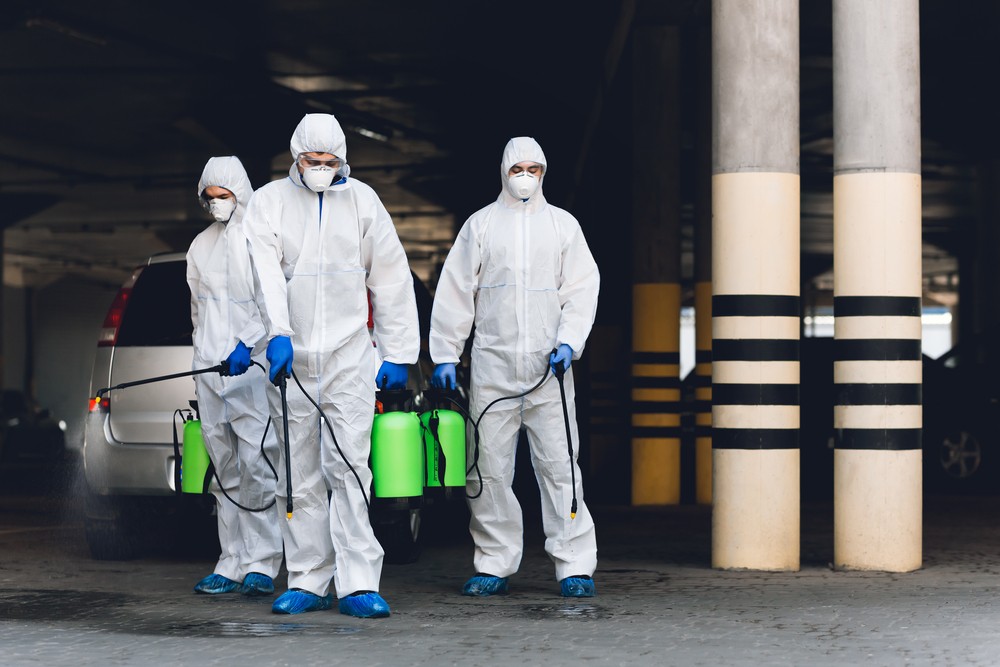
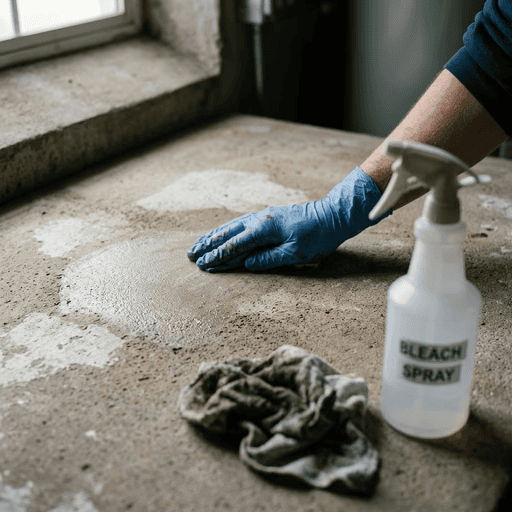
General cleaning crews
Standard Cleaning
Standard cleaning only treats visible surfaces, leaving hidden pathogens and odors trapped deep within.
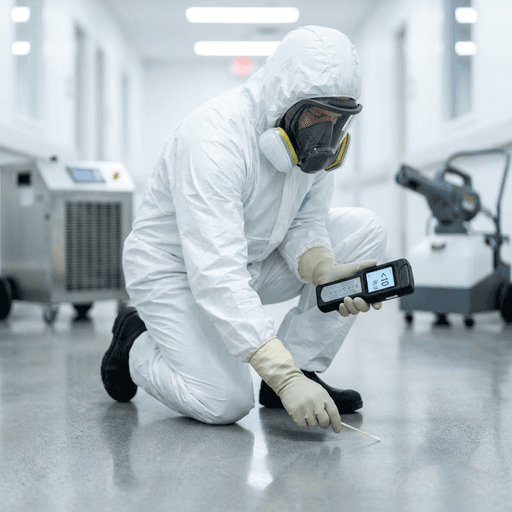
Remnant
Full Decontamination
We eliminate biohazards at the molecular level, using advanced ATP testing to guarantee 100% decontamination.
A dedicated team is on call for Spokane, Spokane Valley, Liberty Lake, Cheney, Airway Heights, Mead, and the surrounding Inland Northwest.
Why Biohazard Situations in Spokane Demand Speed
A biohazard scene rarely waits for anyone to figure out what to do next. After an unattended death in a Spokane home, biological breakdown begins within hours and pulls fluids into flooring, drywall, and subfloor before the family is even notified. Communicable disease residue, whether from MRSA, C. diff, or hepatitis, stays viable on surfaces for days and continues exposing anyone who enters. Trauma scenes left after an accident or medical event carry the same kind of risk on a smaller footprint.
Spokane's climate sharpens the pressure. Summer heat trapped inside a closed home in Spokane Valley accelerates decomposition and pushes contamination deeper into building materials, while winter cold can preserve a scene long enough for it to be discovered weeks later in worse condition than expected. Whatever the situation, a faster response means less of the property is lost and a far cleaner outcome.
Our Step-by-Step Biohazard Cleanup Process
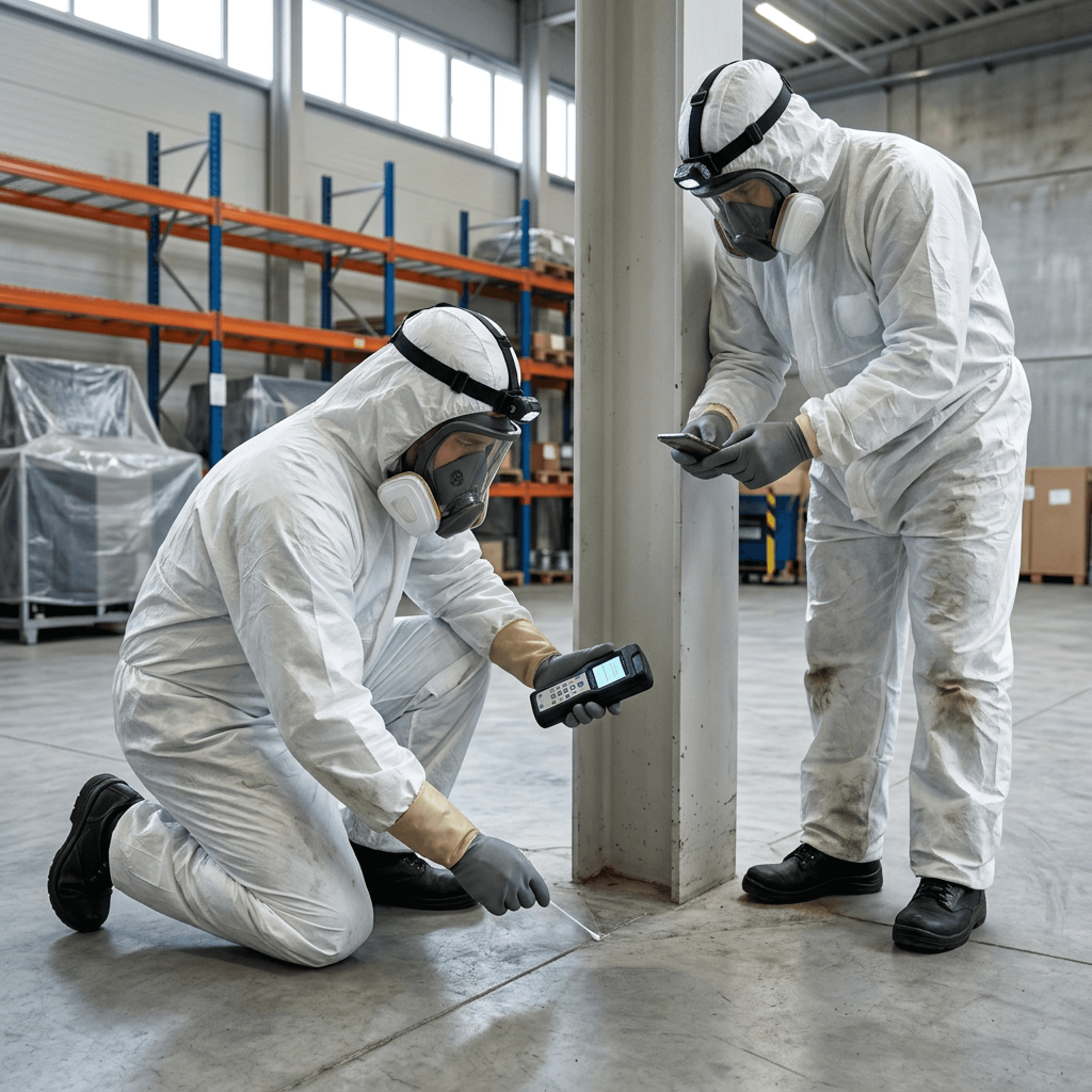
Site Walkthrough
Before any cleaning starts, a technician walks the property, traces the contamination back to its source, and flags every area at risk.
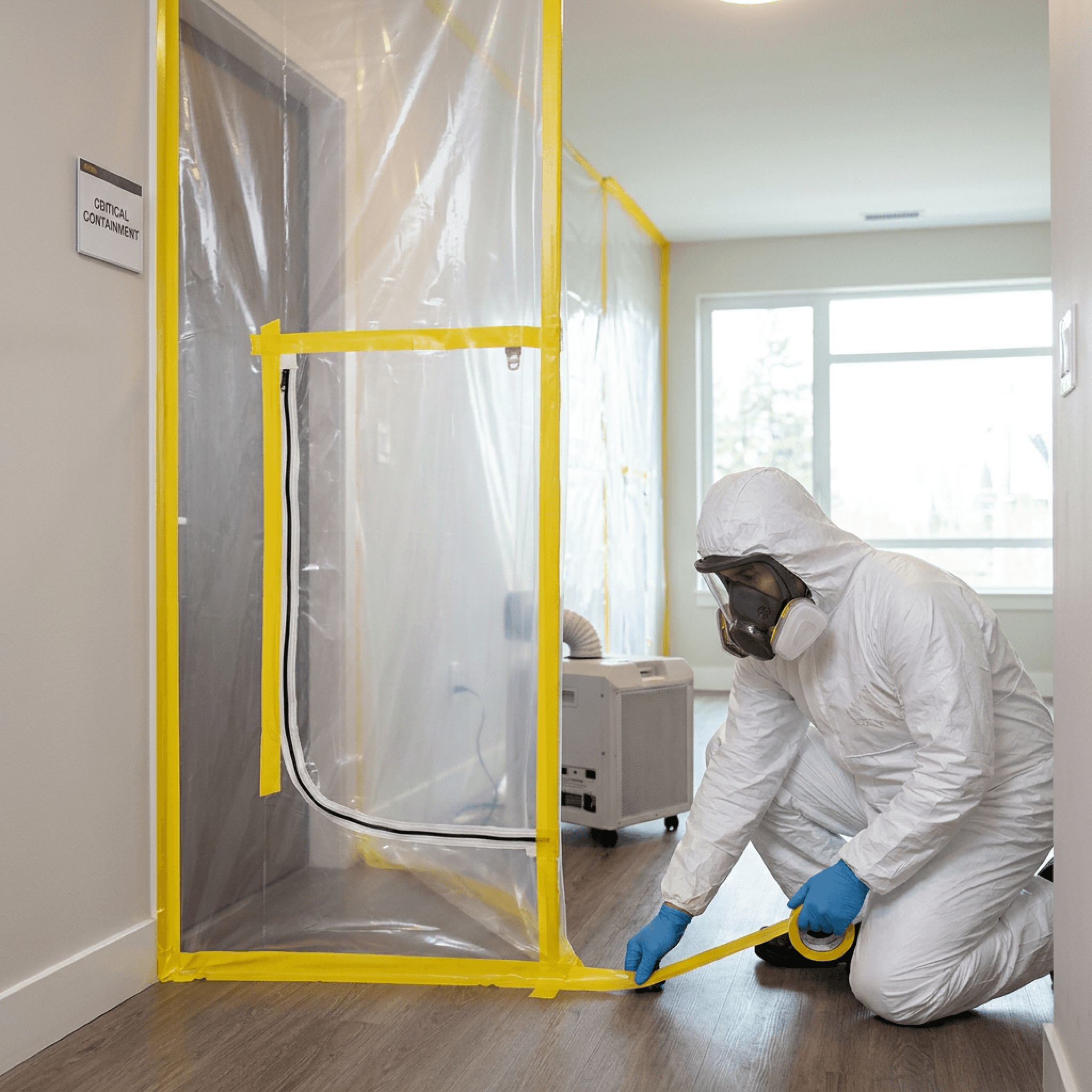
Area Seal-Off
Sheeting goes up around the affected space, and negative-pressure machines pull air inward so nothing leaks into clean parts of the home.
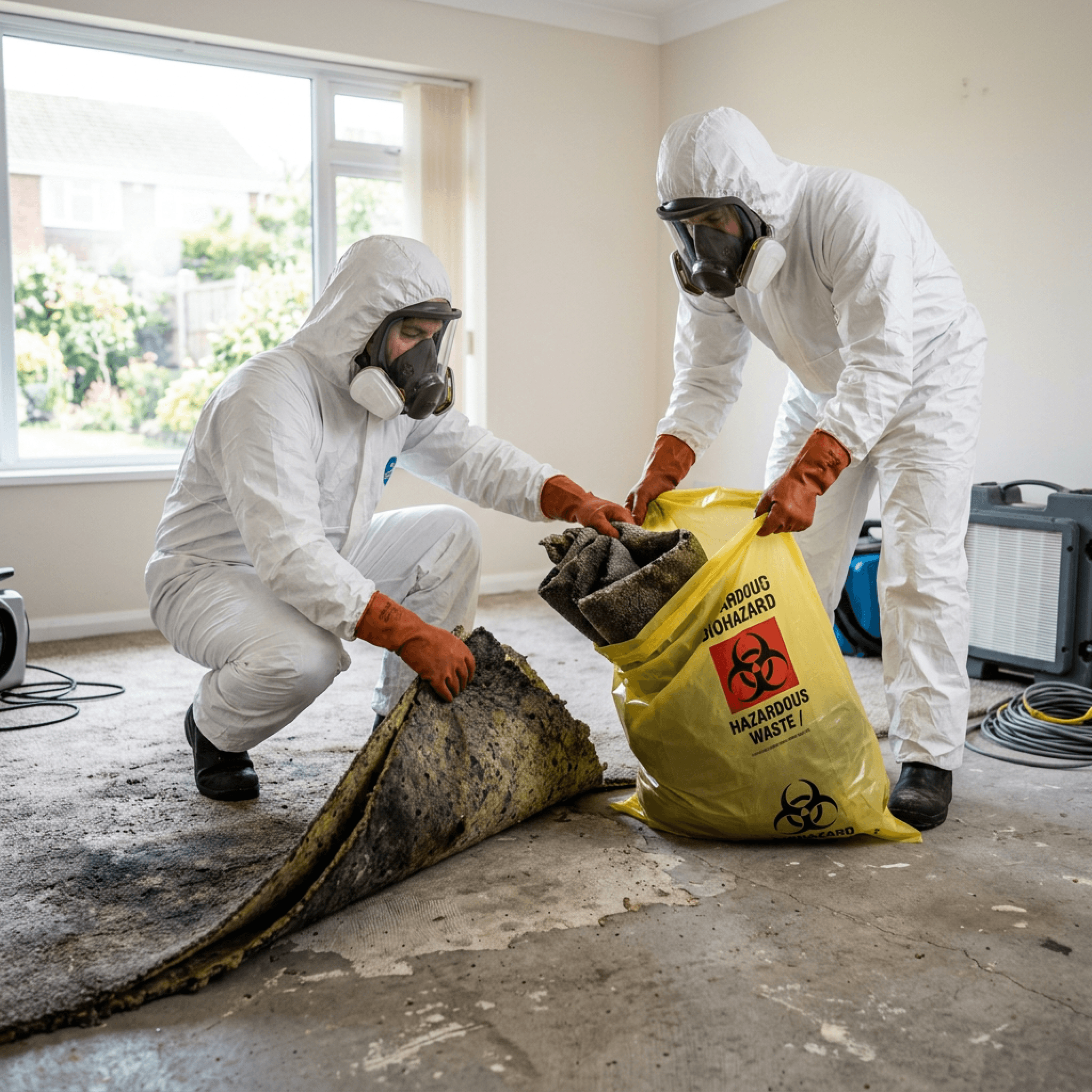
Material Removal
Anything that's absorbed contamination, drywall, insulation, padding, soft furnishings, leaves the property in sealed biohazard packaging.
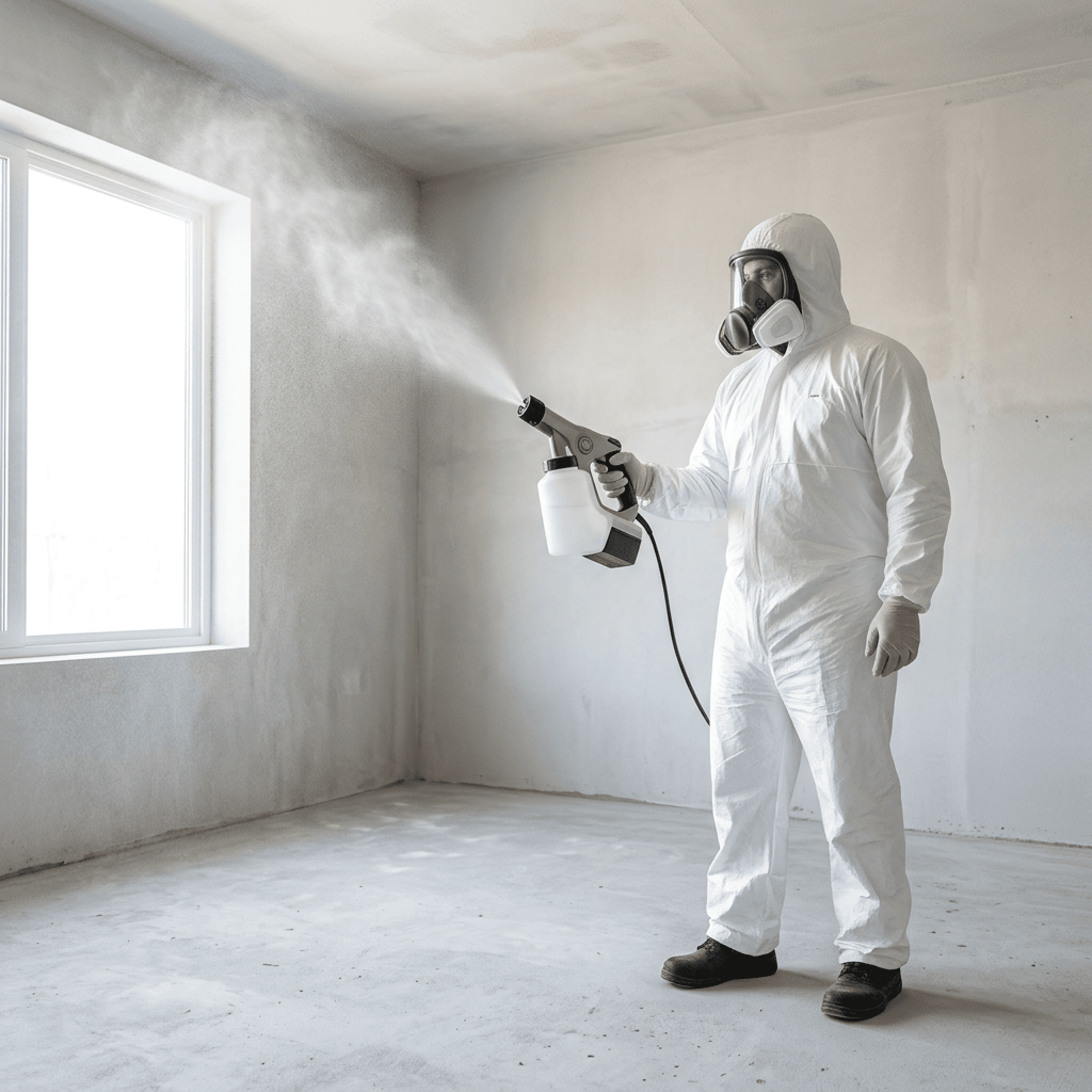
Surface Treatment
Each disinfectant is matched to the pathogen at hand, applied generously, and given time to do what a regular cleaner can't.
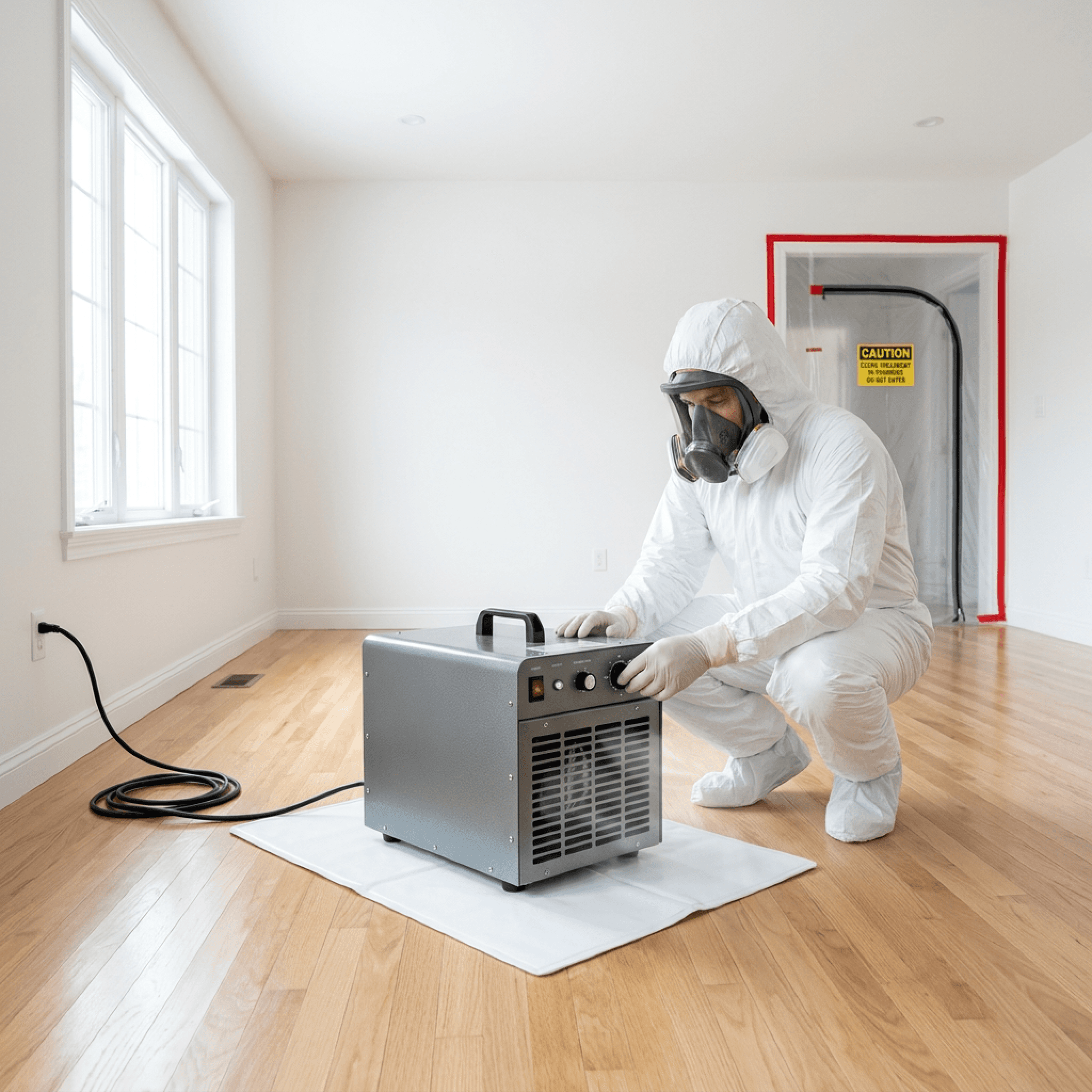
Air and Odor Cleanup
Once surfaces are handled, HEPA scrubbers clear the air while ozone or hydroxyl machines work on smells that hide in fabric and wood.
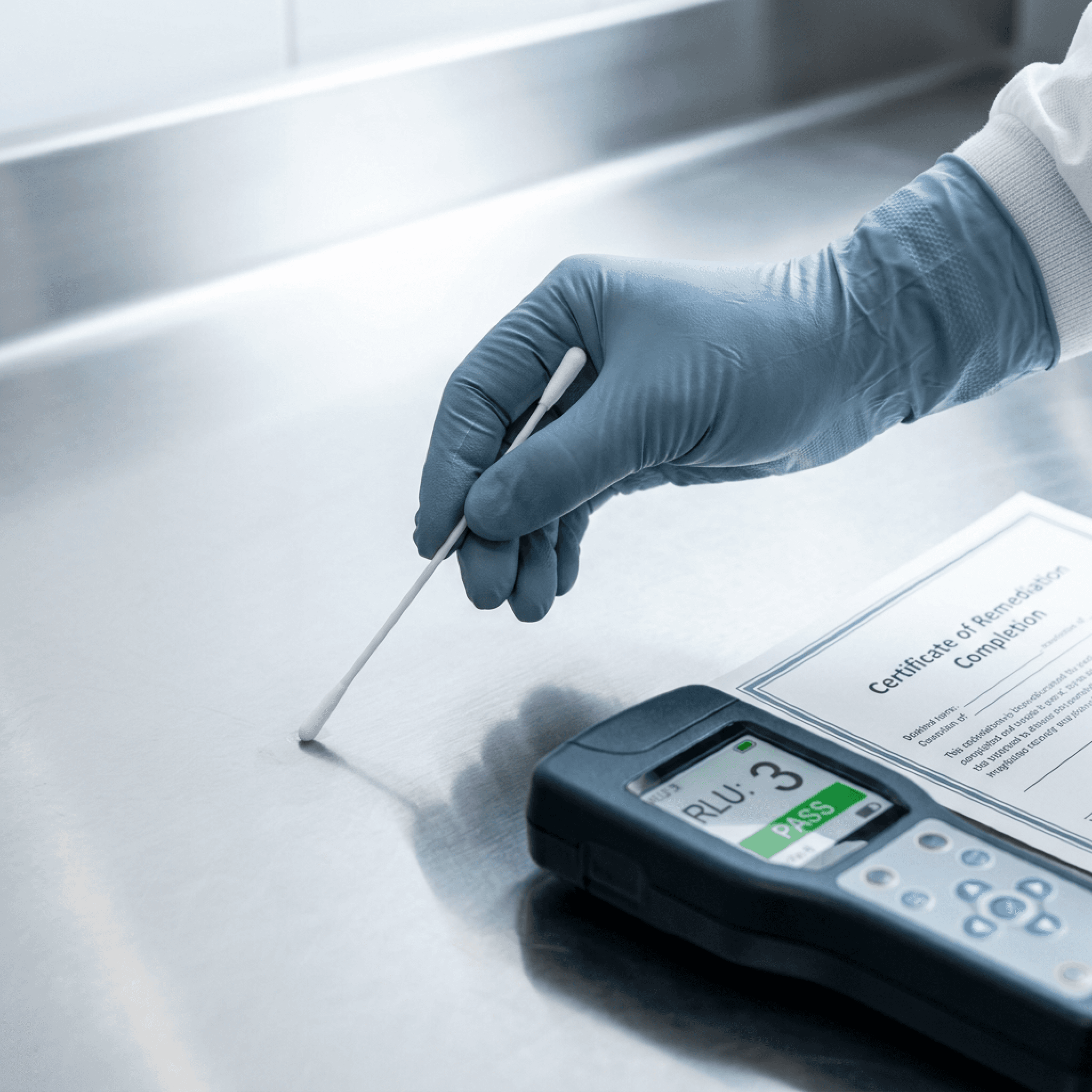
Final Test and Report
The job closes with a clearance swab and a written report, giving the property owner proof the space is safe to use again.
The Equipment and Products We Use During Cleanup
Biohazard work takes our crews into the kind of environments most people will never see, and the gear reflects that. Tyvek suits seal the body head to ankle, P100 respirators filter pathogens released during decomposition, two layers of nitrile gloves guard against hidden sharps, and sealed boot covers stay inside the containment line. For higher airborne risk, like advanced decomposition or infectious disease residue, full-face respirators with HEPA cartridges take over. HEPA scrubbers run the entire time, pulling particles as small as 0.3 microns from the air.
What gets sprayed on the surfaces matters just as much. Different biohazards demand different chemistry, and a one-size cleaner doesn't exist in this work. Our disinfectants are EPA-registered, hospital-grade, and proven against bloodborne pathogens, norovirus, hepatitis, MRSA, and C. diff. Dwell time isn't a suggestion; the product only kills what it's rated for when given time to act. The job ends with an ATP test on cleaned surfaces. If anything is still there, the test catches it.
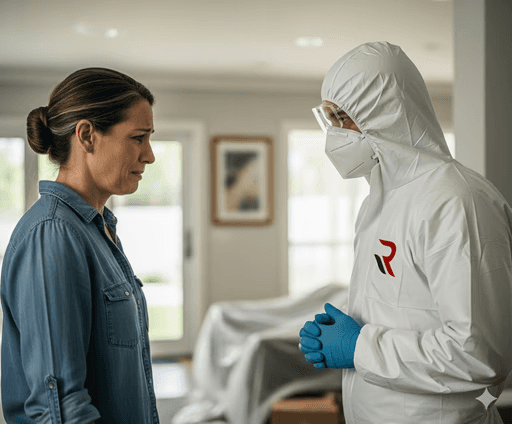
Common Situations Remnant Handles
Unattended deaths, decomposition, and trauma scenes inside the home
Infectious disease residue and biohazard-heavy hoarding cleanups
OSHA
Certified
24/7
Response
99.9%
Cleanup Success Rate
"My dad passed away at home and wasn't found right away. Remnant took care of everything. They were respectful the whole time and we'd recommend them to anyone in this situation."
Still Have Questions?
What kinds of situations does biohazard cleanup cover?
The service handles unattended deaths, trauma scenes, blood and bodily fluid contamination, communicable disease residue, and hoarding cases involving biological waste. Anything where biological matter creates a health risk falls under biohazard cleanup.
How is biohazard cleanup different from a regular deep clean?
Standard cleaning crews aren't trained for pathogen exposure and don't carry the equipment, disinfectants, or disposal access required. Biohazard cleanup is regulated work governed by OSHA bloodborne pathogen standards and licensed medical waste handling.
How long does a typical job take?
Most residential biohazard cleanups are completed in one to two days. Cases involving advanced decomposition, structural saturation, or extensive material removal can extend longer depending on what the property requires.
Does insurance cover biohazard cleanup?
In many cases, yes. A range of Washington homeowner and rental policies cover biohazard remediation under specific perils. Our team works directly with insurers and prepares the documentation needed to support a claim.