General cleaning crews
Visible Cleaning
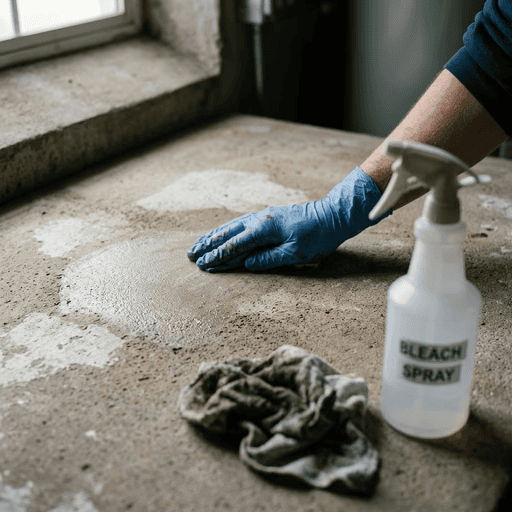
Standard cleaning only treats visible surfaces, leaving hidden pathogens and odors trapped deep within.
Remnant
Verified Decontamination
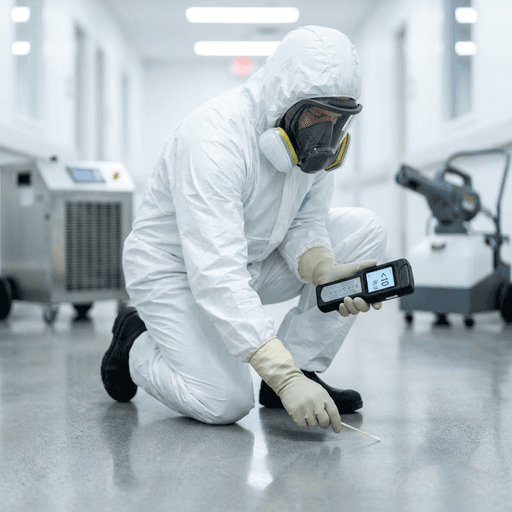
We eliminate biohazards at the molecular level, using advanced ATP testing to guarantee 100% decontamination.
From Denver to Aurora, Lakewood, Arvada, Westminster, and Centennial, a technician is never far from the call.
The Practical Side of Blood Cleanup for Denver Property Owners
Blood and other potentially infectious fluids cannot be disposed of through Denver curbside collection, commercial dumpsters, or standard waste haulers. The material is regulated, and the licensed transport, permitted disposal facility, and chain-of-custody paperwork are required parts of any cleanup that gets done correctly.
The Denver climate creates a counterintuitive timing factor. Dry mountain air desiccates blood faster than humid climates do, which can look like the cleanup should be simpler. The reality runs the other way. Once blood has dried into hardwood, lath, or subfloor, especially in the older Capitol Hill and Five Points housing stock, the bond to the material is harder to break, not easier. The high-altitude UV exposure also drives structural changes in carpet fibers and upholstery that complicate later treatment. Day-one response keeps the project on the surface; a delayed response usually pushes it into removal.
Our Blood Cleanup Process From the First Call to Final Sign-Off
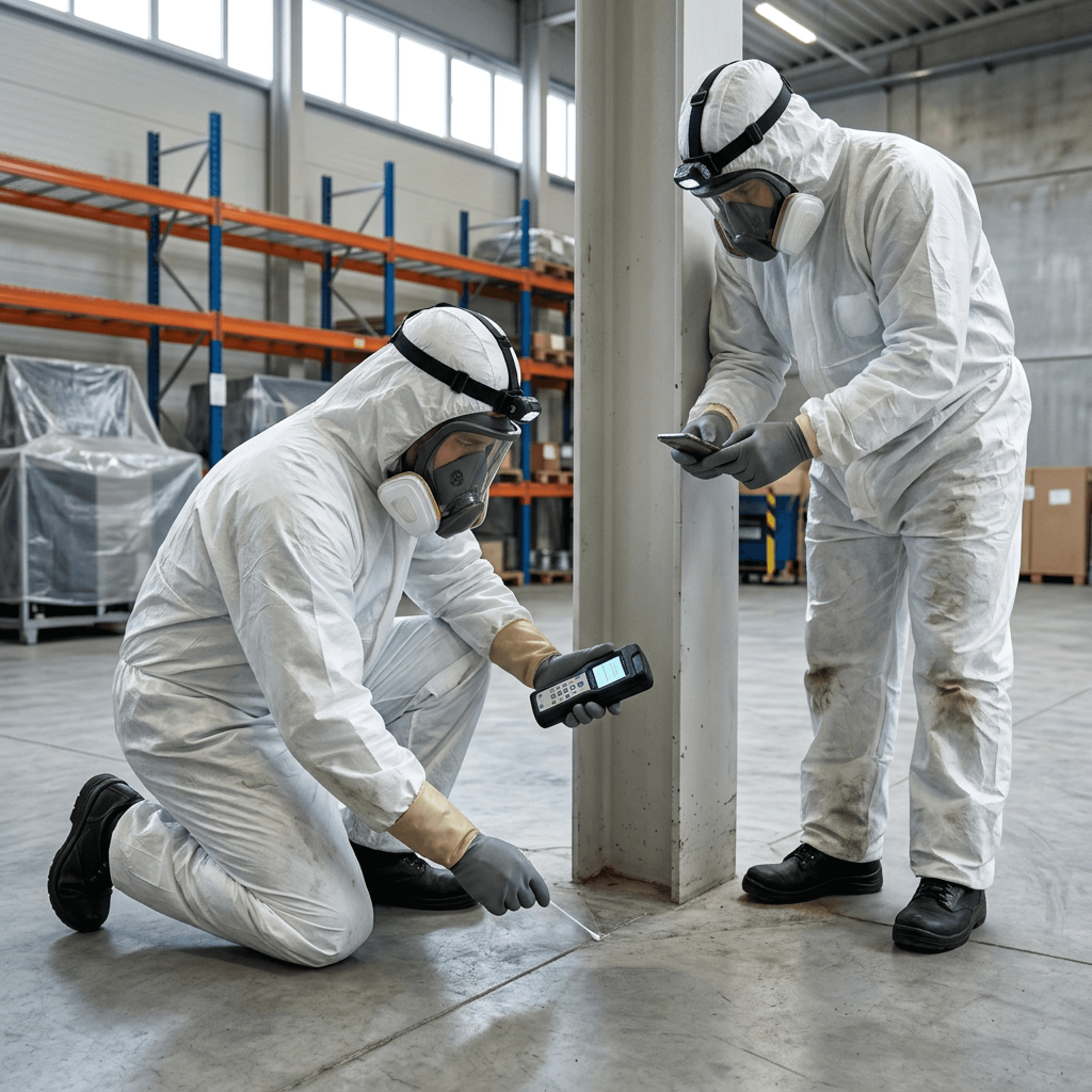
Scene Inspection
A technician arrives on-site, inspects the affected area, and tests surrounding surfaces for spread.
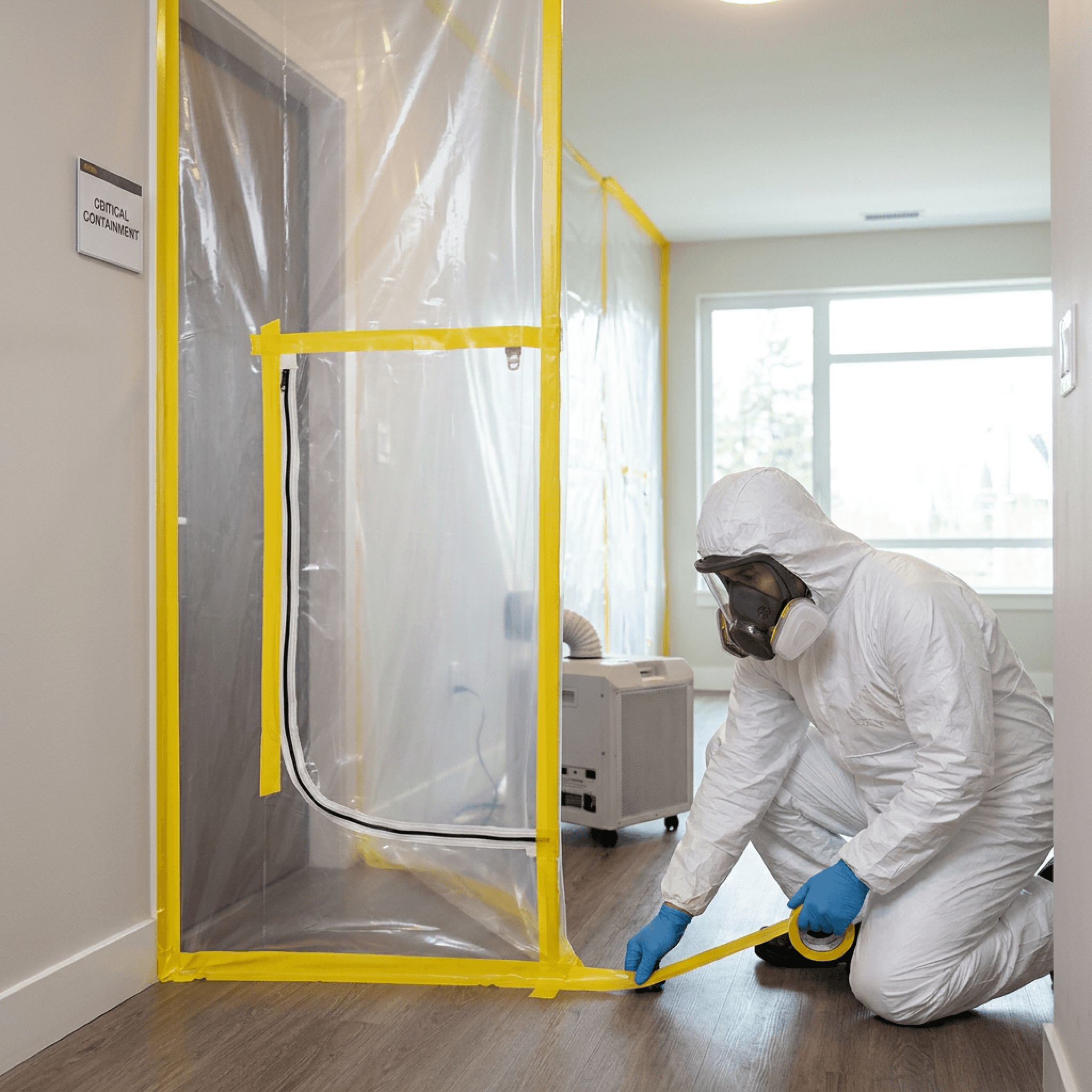
Area Containment
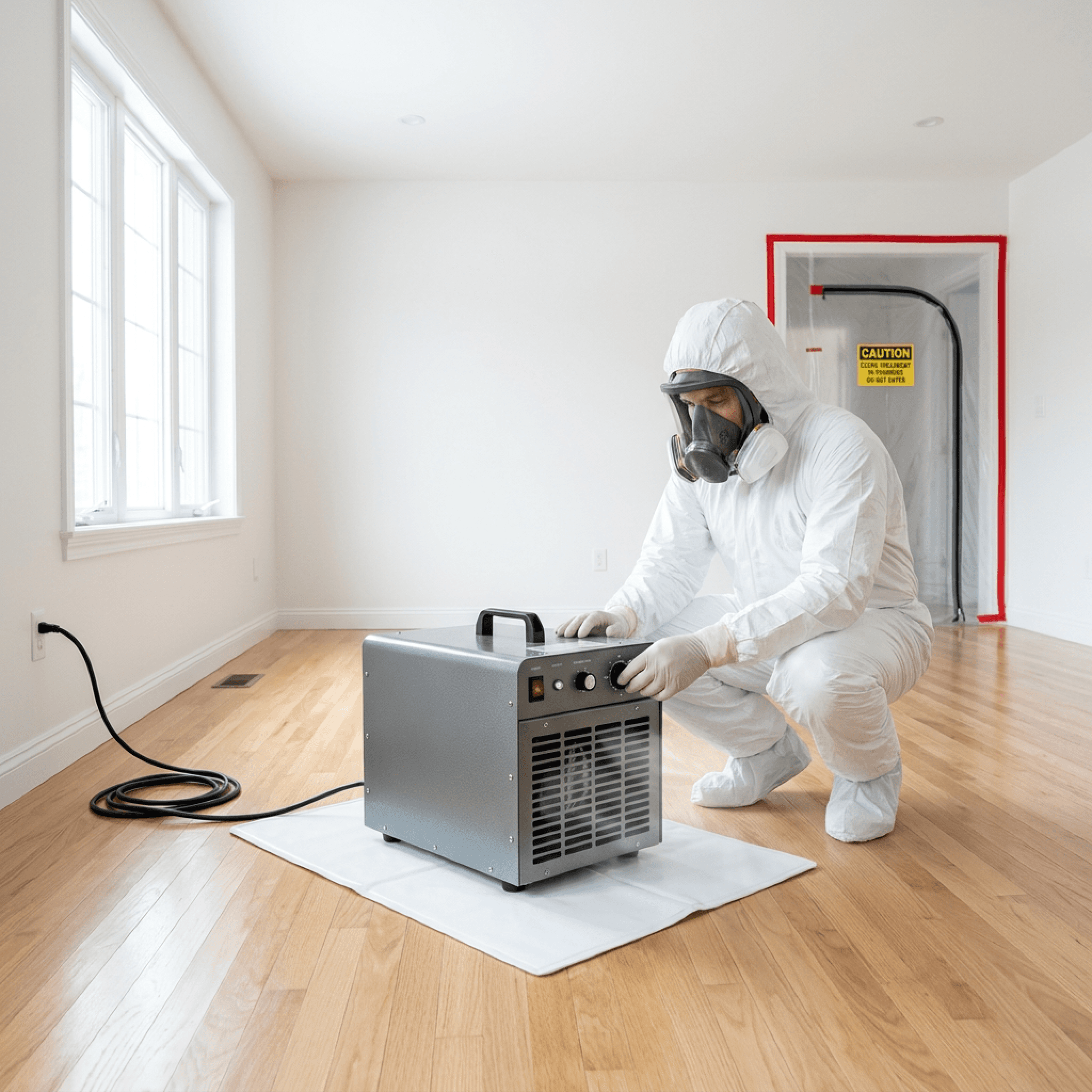
Plastic sheeting goes up around the affected room and HEPA air scrubbers start running before cleanup begins.
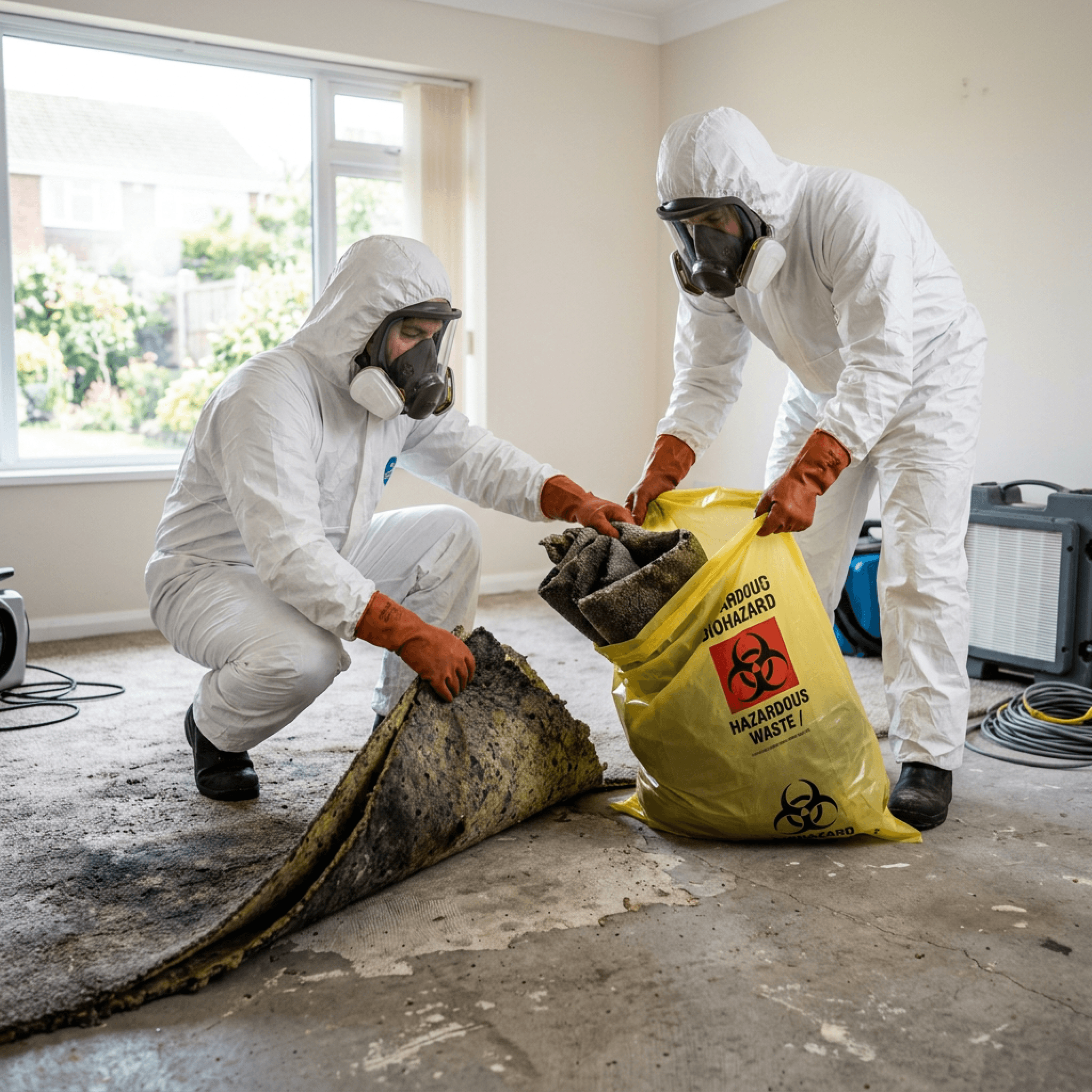
Material Removal
Blood-soaked carpet, padding, drywall, and upholstery are cut away and sealed in red biohazard bags.
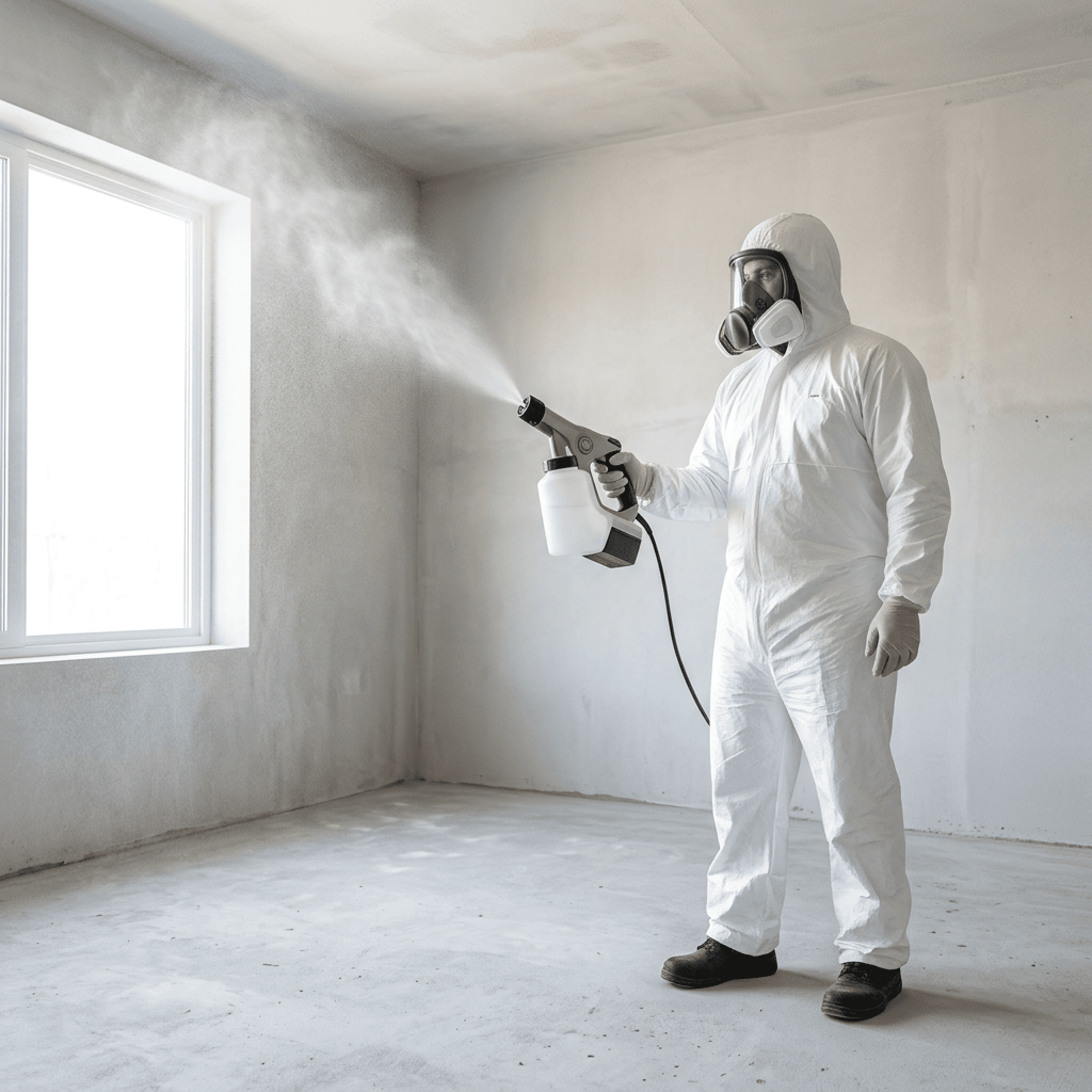
Surface Disinfection
Hard floors, walls, and fixtures get scrubbed with hospital-grade disinfectant and left to sit for the required dwell time.
Air and Odor Treatment
HEPA filtration runs until airborne particles clear, and an ozone or hydroxyl machine handles any lingering smell
Final Check
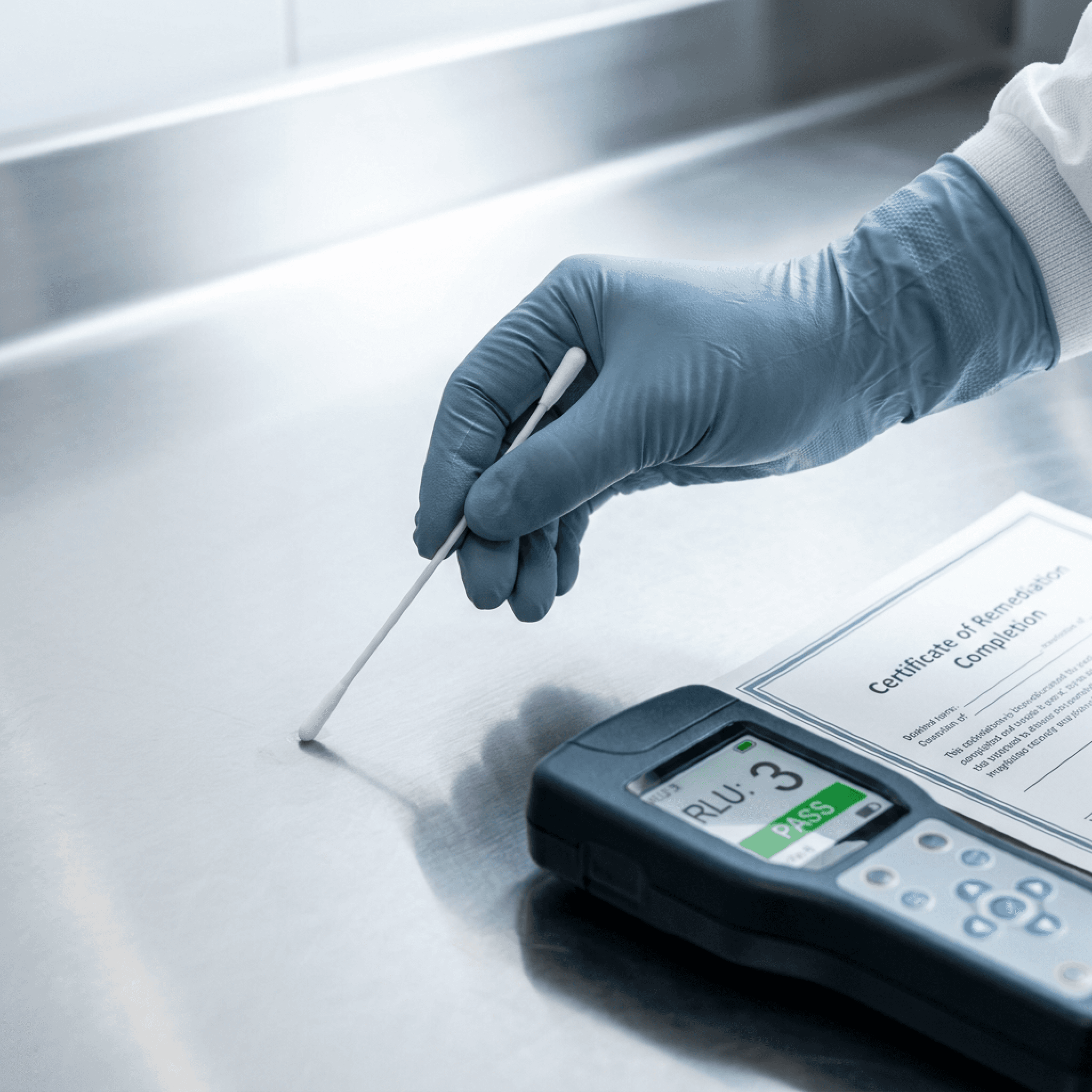
Surfaces are swabbed and tested, photos are taken, and a signed report is handed to the property owner.
The Process for a Blood Cleanup in a Denver Property
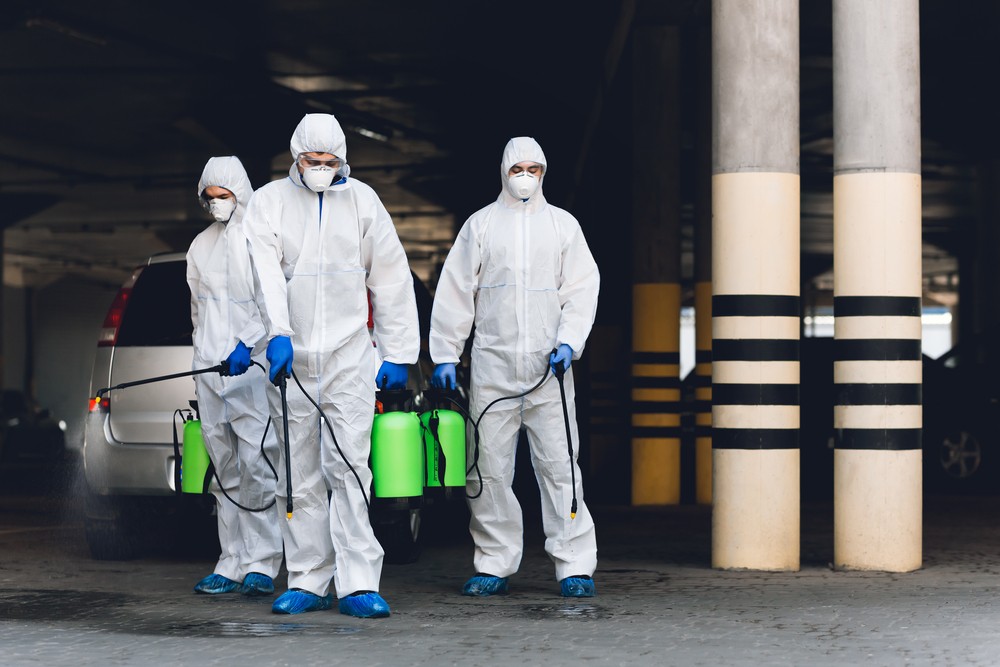
Step one is the seal. The crew enters in Tyvek, P100 respiration, doubled puncture-rated gloves, and sealed footwear, with HEPA filtration in operation and the affected zone walled off from the rest of the property. In Denver's denser apartment and condominium stock, the containment design extends to shared ventilation paths between units.
EPA-registered hospital-grade disinfectants validated against HIV, hepatitis B, hepatitis C, and MRSA take care of the surface work, and manufacturer-specified contact windows run in full on every application. For older Denver properties where dry-air desiccation has hardened blood into original wood, lath, or plaster, the treatment sequence runs longer to account for the deeper bonding. Materials that absorbed contamination on the porous side come out, packaged for medical waste transport, and travel under documented chain of custody to a licensed disposal facility. ATP testing produces the cellular-level verification, and the clearance file gets returned to the property owner.
OSHA
Certified
24/7
Response
99.9%
Cleanup Success Rate